
Sela Macaque, Macaca selai
SELA MACAQUE
Macaca selai
Geographic Distribution and Habitat
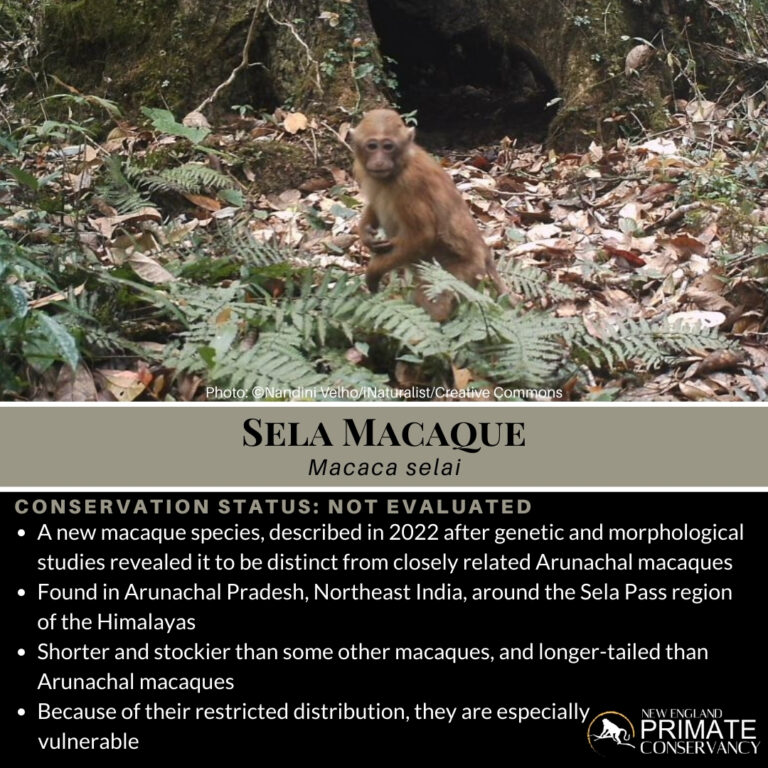
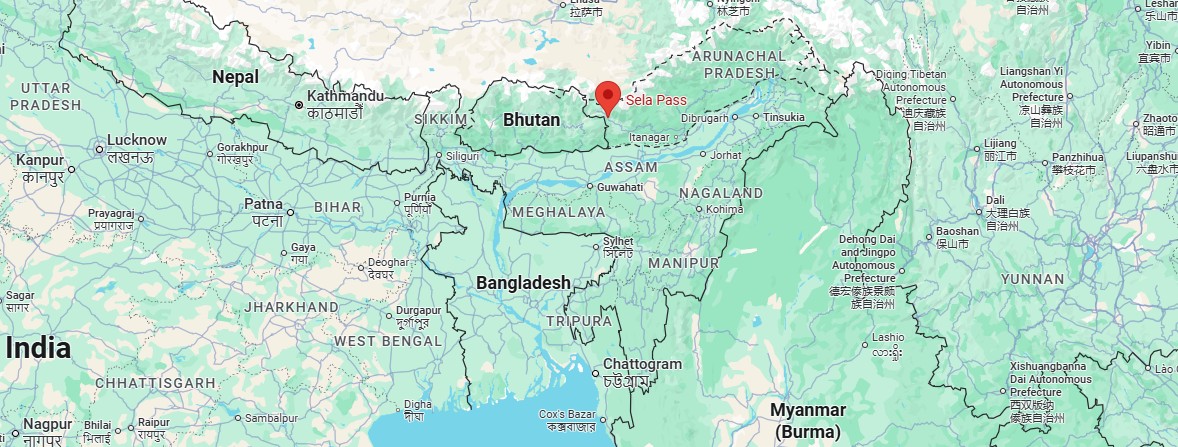
The Sela macaque (Macaca selai) was officially recognized as its own species in 2022. Before that, it was grouped with and studied as the Arunachal macaque (Macaca munzala). Both species inhabit the high-altitude forests of Arunachal Pradesh, India, and share a similar appearance. However, these two species are separated by the Sela pass, which acts as a natural barrier between the borders of Tawang and West Kameng districts of Arunachal Pradesh. The Sela macaque is found in West Kameng, while the Arunachal macaque inhabits Tawang.
These macaques inhabit the mixed broad-leaved forests of the Eastern Himalayas, at altitudes ranging from approximately 6,561 to 11,482 feet (2,000 to 3,500 m). The eastern Himalayas are a part of a terrestrial biodiversity hotspot that is home to endemic species of plants and birds, including the Sela macaque. The region gets heavy snowfall during the winter, and parts of the Sela pass maintain snow cover throughout the year. Vegetation can be scarce or patchy, particularly in regions where human activities, such as agriculture and development, have led to deforestation. They can live in the human-altered landscapes, often raiding crops for food.
As a newly classified species, research on Sela macaques is still limited. However, because they were considered the same species as Arunachal macaques until 2022, earlier studies on Arunachal macaques likely included data on Sela macaques as well. From these studies, we can extract valuable insights by identifying which study sites fall within the current known range of the Sela macaque. Since this species is found only in the West Kameng district, research from that region is likely to be specific to it.
Sela macaques also share a similar habitat and physical appearance with Arunachal macaques, so it is reasonable to assume that many of their basic physiological and biological traits are likely to be comparable. However, social structure and behavior could differ significantly. For now, much of what we know about the Sela macaque is inferred from its close relative, the Arunachal macaque, and further species-specific research is needed to fill in the gaps.
The Sela macaque (Macaca selai) was once thought to be the same species as the Arunachal macaque (Macaca munzala). However, genetic studies later confirmed that the macaques living on the eastern side of the Sela Pass are different enough to be considered a separate species. Because of these differences, scientists reclassified them as the Sela macaque.
The Sela Pass is a high-altitude mountain pass in western Arunachal Pradesh, serving as a natural barrier between two macaque populations. While people can cross it, the pass is wide, cold, and exposed, making it unlikely that monkeys regularly moved across it. Because there was no gene flow between the two sides, the macaques became reproductively isolated. Without interbreeding, the eastern population followed its own evolutionary path and eventually became a distinct species. Genetic studies show that Sela and Arunachal macaques likely diverged around 1.96 million years ago.
Size, Weight, and Lifespan
Some reports suggest that the Sela macaque is slightly larger than the Arunachal macaque. Sela macaques’ body length measures between 28 and 32 inches (71-82 cm). Their tail is significantly shorter, measuring approximately 10.4 inches (26.4 cm). They weigh about 33 pounds (15 kg).
While the exact lifespan of Sela macaques is unknown, it is assumed to be similar to that of other macaque species of comparable size, around 30 years.
Appearance
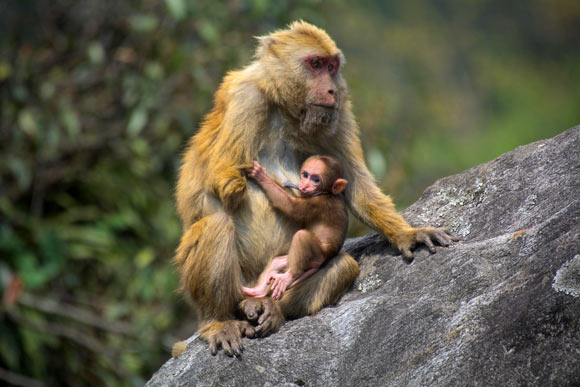
Sela macaques are stocky monkeys with long, dense fur that helps them cope with the cold temperatures of their high-altitude habitat. Their coat is mainly brownish-yellow, and they have noticeably pale faces. This facial contrast is one of the most apparent visual differences between them and Arunachal macaques, which have darker faces and coats.
Sela macaques have a pale forehead and bushy yellow-brown whiskers that extend down the sides of the face. Their ears are prominent and point upward. In adults, the ears are covered in thick fur. Their faces are pink and hairless, with deep-set light brown eyes. The chest is pale and stands out against the rest of the coat, especially when compared to the hands and feet, which are much darker. Their tails are short, measuring less than half the length of their body. Like other macaques, they have ischial callosities (hairless calluses on their buttocks) that help cushion them when sitting on cold or rocky mountain surfaces.
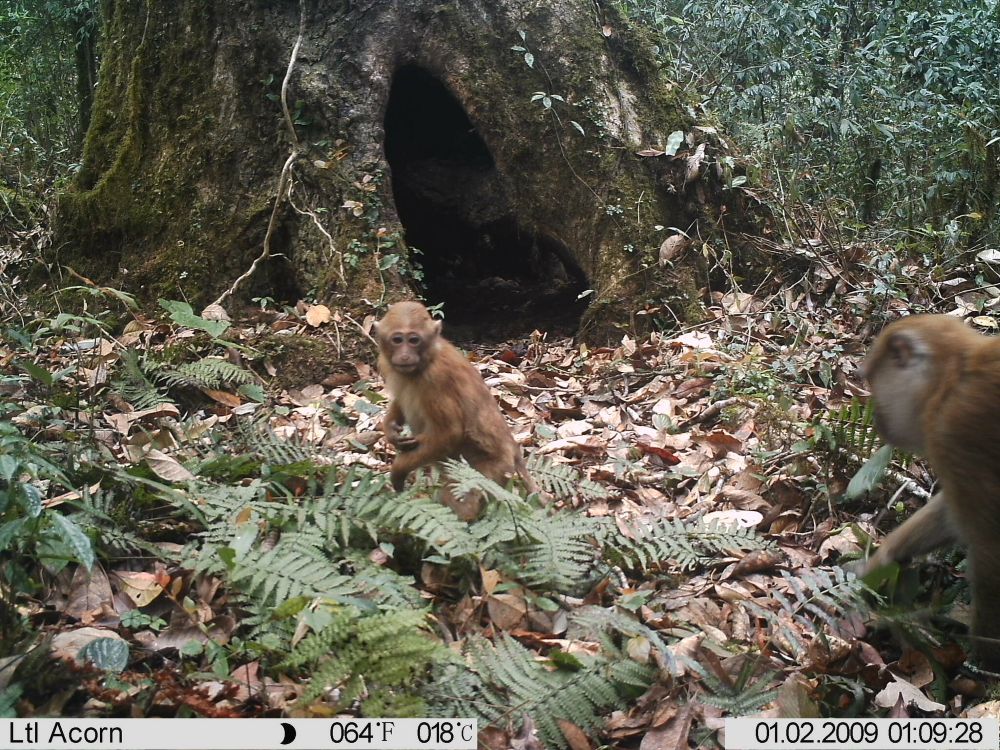
Infant Sela macaques have much less hair than adults and are bald in some areas. Their ears are fully exposed, and the entire earlobe is visible. Their tails appear thin and whip-like due to the lack of fur and taper sharply at the end. These infants cuddle into the warmth of their mother’s thick fur as they are carried around on her chest and belly.
Males are slightly larger than females and have much larger canines, which they often display to intimidate potential threats. Male reproductive organs are also clearly visible, making it easier to tell the sexes apart in the wild. These physical differences between males and females make Sela macaques a sexually dimorphic species.
Diet
Like all macaques, Sela macaques are primarily herbivorous, with fruits making up the bulk of their diet. They also feed on leaves and, on occasion, catch and consume insects or their larvae. In areas near human settlements, these macaques have been known to raid farms, eating grains such as millet grown in nearby fields.
Their diet shifts with the seasons. During winter, food options become more limited, and the macaques rely heavily on older leaves and other low-nutrient plant materials that are high in fiber. To compensate, they spend more time feeding to meet their energy needs. They conserve energy by staying close to familiar feeding grounds, rather than traveling considerable distances to find food. In contrast, spring brings an abundance of fresh fruits and leaves, and the macaques expand their foraging range to get more of these nutritious foods.
Behavior and Lifestyle
Sela macaques are diurnal, meaning they are active during the day. They are both terrestrial (ground-dwelling) and arboreal (tree-dwelling), spending time on the ground as well as in the trees. Their habitat includes a mix of rocky, snow-covered slopes and forested areas. These macaques are well-adapted to moving across different types of terrain as they search for food and cope with the challenges of life at high altitudes.
Allogrooming is a typical social behavior in Sela macaques, where individuals groom or comb through each other’s fur to remove dirt, debris, and external parasites. This behavior benefits both parties. The groomed macaque enjoys cleaner, healthier fur, and the groomer often gets a quick snack by eating ticks or fleas. Beyond hygiene, allogrooming also plays an important social role. It helps reinforce bonds within the group, much like a mother brushing her child’s hair strengthens their connection.
Aggressive or antagonistic encounters are relatively rare within groups. Most disputes are resolved through display behaviors rather than physical fights. Macaques open their mouths to flash their sharp teeth as a warning, using posture and facial expressions to communicate dominance or deter conflict without escalating the situation.
They use branches about 50 feet (15 m) high to form their sleeping sites, where a family gathers to rest for the night.
The Selai Macaque was classified as a species in 2022.
They live in the high-altitude Eastern Himalayan mountains habitat, known for its endemic and rare wildlife species.
They are named after the Sela mountain pass, where they are found, in Arunachal Pradesh, India.
Adults have long, thick hair to protect them from the snowy winters, but infants are almost hairless and have to rely on burrowing into their mother’s furry belly for warmth.
Fewer than 500 individuals remain in the wild.
Soon after sunrise, around 6 a.m., Sela macaque troops wake up and begin their day, which is mostly spent foraging for food. As the day warms, especially during the hotter months, they take a midday break when the sun is at its peak. During this rest period, individuals engage in allogrooming, while younger macaques often play with one another.
In the snowy winter, when food is scarce, macaques conserve energy by limiting their movements. They will find a reliable patch of food—such as a cluster of trees with enough leaves or nuts—and remain in that spot for most of the day. In contrast, during the warmer spring season, when fruits and leaves are more abundant, they travel farther in search of higher-quality, energy-rich food.
After their midday rest, activity increases again. The troop resumes traveling and foraging, making the most of the afternoon hours. Well before sunset, the group selects a suitable sleeping site high in the tree canopy. There, they huddle together for warmth and protection from predators.
From the limited studies available, interactions within Sela macaque family groups are largely peaceful. Social behaviors like grooming, play, and cooperative resting reflect strong bonds and low levels of internal conflict.
Macaques are a vocal species that uses a variety of sounds, including loud calls, soft grunts, and other vocalizations, to communicate with family members or nearby troops. While there are no detailed studies yet on the specific vocal range or meanings of Sela macaque calls, some patterns have been observed in the field.
The most commonly documented sounds are alarm calls, usually made by adult males when they spot human observers. These warning calls often continue as long as the perceived threat remains visible and may only stop once the troop has left the tree canopy and moved into thicker vegetation.
In addition to vocalizations, Sela macaques likely use gestures and olfaction (the sense of smell) to communicate with one another. Baring teeth and raising eyebrows are common facial expressions observed in macaques, which may signal a display of aggression, submission, or reassurance within the group.
Sela macaques are most likely to have a similar biology to other macaque species. Their gestation period (the time females are pregnant) is approximately five to six months, and the intergestational period (the time between births) is two years. Usually, a single infant is born at a time. Infants are entirely dependent on their mothers for protection and food. Mothers carry their infant across their belly as they move with the troop to forage.
Female macaques become sexually mature around 4 years old, and males take longer, at about 4.5 to 5 years old.
Sela macaques live in multi-male groups that follow a matrifocal or matrilineal social structure. Troops are female-bonded, comprising primarily mothers and their offspring. Within this structure, social rank among females is inherited. If a dominant female loses her position, her daughter may assume the role of the new dominant female in the group.
Adult males have their own dominance hierarchy, which is typically tied to mating opportunities and reproductive success. They are also the primary defenders of the troop. When faced with predators or rival groups, males are usually the first to confront the threat, protecting the rest of the troop from harm.
A typical troop includes one or two adult males, several adult females, and their young at different developmental stages (infants, juveniles, and subadults). Troop size can range from five to a recorded maximum of 29 individuals. While macaque troops can grow quite large, more ecological research is needed to determine typical group sizes for Sela macaques. As a recently identified species with a limited range and limited food availability, their troop sizes may be smaller or more variable than those of other macaque species that can live in troops of 50 individuals.
Sela macaques are a highly adaptive species that can consume a variety of foods and thrive in the cold, rocky Himalayan forests. Their preference for fruits and large troop movements suggests that these macaques may play a role in dispersing seeds far from the parent tree, allowing tree species to regenerate in new areas. This makes them an important link between fruiting trees and the spread of vegetation, especially in areas where few other frugivores can thrive due to altitude or cold temperatures.
Sela macaques serve as potential prey for predators such as wild dogs (dholes), snow leopards, and tigers. While we do not yet know how frequently Sela macaques are hunted or how essential they are to these predators’ diets, it is clear that they are a part of the region’s unique and rich biodiversity. Sela macaque populations have persisted and expanded since the last glacial period in that region, roughly 20,000 to 15,000 years ago. As part of the complex ecology of the eastern Himalayas, they have evolved to thrive in an environment characterized by seasonal extremes and fluctuating food availability.


The International Union for Conservation of Nature (IUCN) has not yet assessed the conservation status of the Sela macaque, likely due to the recent recognition of the species as a distinct entity. However, before they were classified separately, Sela macaques were grouped under the Arunachal macaque. As a result, past IUCN assessments for the Arunachal macaque included data from both populations.
Arunachal macaques are currently listed as Endangered (IUCN, 2015) on the International Union for Conservation of Nature (IUCN) Red List of Threatened Species. Upon their assessment, Sela macaques may be similarly classified or listed as Critically Endangered, because of their low population numbers
Recent reports suggest that there are at least three troops of 29 Sela macaques in West Kameng.
Retaliatory hunting is the main threat to Sela macaque survival. Local farmers often see them as pests and may catch or kill them when they raid crops. Outside of these conflicts, Sela macaques are not hunted for food or sport, and they are not kept as pets.
Habitat loss is not currently a significant threat to Sela macaques. The high-altitude eastern Himalayan forests where they live are relatively well-protected from deforestation, in part due to the region’s long-standing recognition as a biodiversity hotspot. However, the available habitat is naturally limited, which presents a challenge for long-term population growth.
Although Sela macaques are adaptable and may be able to use lower-altitude areas where human activity is more concentrated, this expansion increases the risk of human-wildlife conflict.
As a species that’s used to living in cold, high-altitude forests, they are more vulnerable to human-driven changes. These changes (like land use, climate shifts, or development) tend to happen quickly and on a large scale, which makes it harder for Sela macaques to adjust in time.
Some researchers are concerned that Sela macaques living in proximity to human environments and consuming more crops may be exposed to diseases carried by humans that their immune systems are not equipped to handle. Studies have already shown that macaques who regularly raid crops have a different gut biome compared to those that eat mostly wild foods. Since the gut biome plays a key role in digestion and overall health, these changes could have long-term impacts on the macaques’ well-being.
Sela macaques are not yet listed under the Convention on International Trade in Endangered Species (CITES). Still, they are likely to receive the same protection as the Arunachal macaque, which is currently listed in Appendix II of CITES.
Since the Zoological Survey of India (ZSI) first identified the Sela macaque as a distinct species, it has pushed for legal protection and conservation action. However, the species is still not protected under India’s national laws, including the Wildlife Protection Act. For now, conservation efforts are being led by scientists, non-governmental organizations, and the ZSI, who are working with local communities to raise awareness and prevent the killing of these macaques.
- Anderson, N. (2022) ‘New species of macaque identified in India’, Sci.News, 31 May. Available at: https://www.sci.news/biology/macaca-selai-10862.html (Accessed:September 16, 2025 ).
- Biswas, J., Borah, D.K., Das, A., Das, J., Bhattacharjee, P.C., Mohnot, S.M. and Horwich, R.H., 2011. The enigmatic Arunachal macaque: its biogeography, biology and taxonomy in northeastern India. American Journal of Primatology, 73(5), pp.458-473.
- Chakraborty, D., Sinha, A. and Ramakrishnan, U., 2014. Mixed fortunes: ancient expansion and recent decline in population size of a subtropical montane primate, the Arunachal macaque Macaca munzala. PLoS One, 9(7), p.e97061.
- Ghosh, A., Thakur, M., Singh, S.K., Dutta, R., Sharma, L.K., Chandra, K. and Banerjee, D., 2022. The Sela macaque (Macaca selai) is a distinct phylogenetic species that evolved from the Arunachal macaque following allopatric speciation. Molecular Phylogenetics and Evolution, 174, p.107513.
- Ghosh, A., Thakur, M., Sharma, L.K. and Chandra, K., 2021. Linking gut microbiome with the feeding behavior of the Arunachal macaque (Macaca munzala). Scientific Reports, 11(1), p.21926.
- Khanal, L., Li, X., Subba, A., Ulak, S., Kyes, R.C. and Jiang, X.L., 2024. Phylogeography of the Sinica Group of Macaques in the Himalayas: Taxonomic and Evolutionary Implications. Biology, 13(10), p.795.
- Kumar, R. S., Gama, N., Raghunath, R., Sinha, A. and Mishra C. 2008. In search of the munzala: distribution and conservation status of the newly-discovered Arunachal macaque Macaca munzala. Oryx 42: 360-366.
- Kumar, R.S., Mishra, C. and Sinha, A., 2007. Foraging ecology and time-activity budget of the Arunachal macaque Macaca munzala–A preliminary study. Current Science, pp.532-539.
- Kumar, A., Sinha, A. & Kumar, S. 2020. Macaca munzala. The IUCN Red List of Threatened Species 2020: e.T136569A17948833. https://dx.doi.org/10.2305/IUCN.UK.2020-2.RLTS.T136569A17948833.en. Accessed on 24 September 2025.
- Mendiratta, U., Kumar, A., Mishra, C. and Sinha, A., 2009. Winter ecology of the Arunachal macaque Macaca munzala in Pangchen Valley, western Arunachal Pradesh, northeastern India. American Journal of Primatology: Official Journal of the American Society of Primatologists, 71(11), pp.939-947.
- Press Information Bureau (2022) ZSI scientists discover new macaque species from West & Central Arunachal Pradesh. Press release, 27 May. Available at: https://www.pib.gov.in/PressReleasePage.aspx?PRID=1828850 (Accessed: September 16, 2025).
- Sanyal, S. (n.d.) Sela Macaque | Shamik Sanyal. Available at: https://www.shamiksanyal.com/selaproject (Accessed: September 16, 2025).
- Sinha, A., Chakraborty, D., Datta, A., Gama, N., Suresh, R., Kumar, M.D., Mendiratta, U., Ramakrishnan, U. and Mishra, C., 2013. Arunachal macaque Macaca munzala. Mammals of South Asia, pp.198-210.
- Sinha, A., Kumar, R. S. and Mishra, C. 2006. Ecology and Conservation of Arunachal Macaque Macaca munzala. In: Nature Conservation Foundation (ed.), Technical Report No. 15. National Institute of Advanced Studies and International Snow Leopard Trust, Mysore, India.
- Sinha, A., Kumar, R.S., Gama, N., Madhusudan, M.D. and Mishra, C., 2006. Distribution and conservation status of the Arunachal macaque, Macaca munzala, in western Arunachal Pradesh, northeastern India. Primate Conservation, 2006(21), pp.145-148.
Written by Acima Cherian, Sep 2025