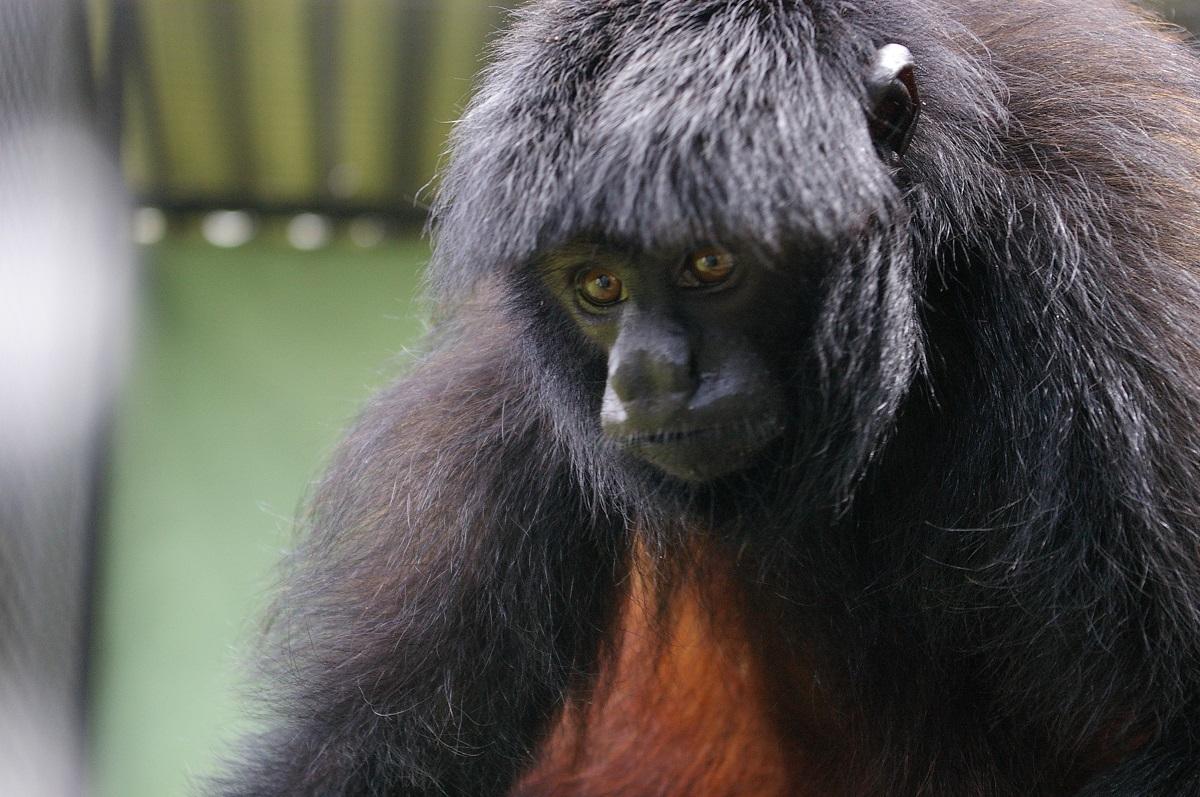
The golden-backed uakari, also known as the black-headed uakari, golden-backed black uakari, and Humboldt’s black-headed uakari, is a platyrrhine monkey, meaning it is among the species of monkeys that evolved in Central and South America. Its primary distribution occurs in south Venezuela, northwest Brazil, and…
Neblina uakaris, also known as black-faced uakaris or black-headed uakaris, live in the rainforests of Brazil and Venezuela. Their distribution is limited by the Amazon River’s large tributaries that cut through both countries. In Brazil, Neblina uakaris are boxed in by the Rio Negro in the south and west and the Rio Marauiá in the east. In Venezuela, they are not found north of Canal Cassiquiare and Rio Orinoco…
The red bald-headed uakari (pronounced “wuh·kaa·ree”) has a limited distribution along the Solimões River and its tributaries in the Amazon forests of Brazil. They are found in three distinct population pockets: the Jacurapá Channel, the northern left bank of the River Jutaí, and the Auati-Paraná river connection between the….
The Ucayali bald-headed uakari (pronounced “wakari”) is found primarily in Peru, between the Ucayali and Yavarí rivers. Earlier reports included parts of western Brazil within their range; however, the only confirmed Brazilian sighting has been in Serra do Divisor National Park in Acre. The population is patchily distributed with…
White bald-headed uakaris (pronounced “wak-AR-i”) are endemic to the western Brazilian states of Amazonas and Acre. Populations occur along the Jurupari, Pauini, and Tarauacá Rivers, regions characterized by tropical rainforests that experience seasonal flooding. These primates are well adapted to flooded forest environments…