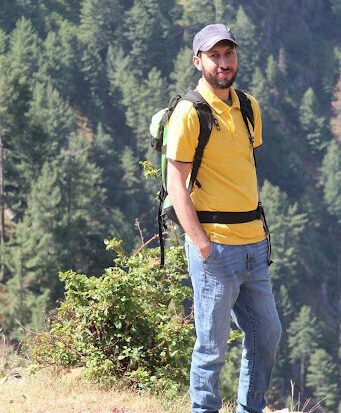
Meet Abid Ali
Primate Conservation Limelight
Abid Ali
PAKISTAN HIMALAYAN LANGUR PROJECT
June 2026
In this interview, New England Primate Conservancy’s Beatrice Bashibyukyan speaks with Abid Ali, an evolutionary and conservation genomics researcher from Pakistan with a background in Zoology. His research focuses on understanding how species evolve, adapt, and persist in changing environments. While much of his work is computer-based and running models, he also conducts extensive field research within the mountain ecosystems of northern Pakistan.
His current research in the Himalayan foothills integrates field ecology, spatial analysis, and genomic approaches to study biodiversity and conservation. Through his work, Abid aims to deepen scientific understanding of understudied and data-deficient species.
My academic background is in zoology, but most of my scientific development has really been shaped in the field and through conservation work in Pakistan. Early on, I found myself working in landscapes where biodiversity still persists, but in fragmented and often overlooked forms. That experience stayed with me—it made me realize how many species we assume are “well known” locally, but are actually very poorly understood in scientific terms.
My interest in primates came later, not from direct encounters, but from reading. It was during my exploration of literature on northern Pakistan’s fauna that I first came across the Kashmir gray langur in scientific texts. The more I read, the more I was struck by a simple but important gap: Despite being reported from parts of the western Himalayas, there was surprisingly little consolidated knowledge about its phylogenetic, ecology, distribution, and conservation status in Pakistan.
At that point, the species existed for me only on paper. I hadn’t seen it in the field. In fact, it became something I kept returning to through books, reports, and scattered references—almost like a species I was trying to track down intellectually, piece by piece. Over time, that absence itself became the most interesting part. The lack of clear local records and ecological understanding made it feel less like a “known” species and more like an unanswered question.
That gap between what is assumed to be known and what is actually documented became a turning point for me. It pushed me to think of the Kashmir gray langur not just as a species of interest, but as a system for understanding how primates persist in fragmented mountain
landscapes shaped by both ecological constraints and human pressures.
Since then, my work has gradually centered on this species, combining field ecology, spatial analysis, and evolutionary thinking to better understand its populations and the processes that shape its survival across these changing landscapes.
A day in primate conservation is rarely routine in the strict sense. In the Himalayan foothills, it usually begins early, moving through fragmented forest edges and village landscapes where human life and wildlife are closely intertwined. Much of the work involves careful
observation—reading habitat conditions, noting signs of primate presence, and understanding how these landscapes are changing over time.
However, the most meaningful part of the work is not only what is recorded in the field, but the time spent with local mountain communities. Sitting with people, listening to their experiences, and understanding their relationship with the land often provides insights. There is a quiet, lived ecological knowledge in these communities that is deeply valuable for conservation.
Some of the most memorable moments in my work have not been dramatic discoveries, but quieter confirmations—finding signs that a primate still persists in fragmented landscapes where its presence was uncertain. Whether through indirect evidence or field verification, these moments carry weight. They are subtle, but they matter, because they turn uncertainty into knowledge and remind you why documenting these landscapes and species is important in the first place.
In the end, what stays with me most is not any single task or project, but the experience of returning to these landscapes, learning from both people and nature, and gradually understanding how primates continue to survive in shared, changing environments.
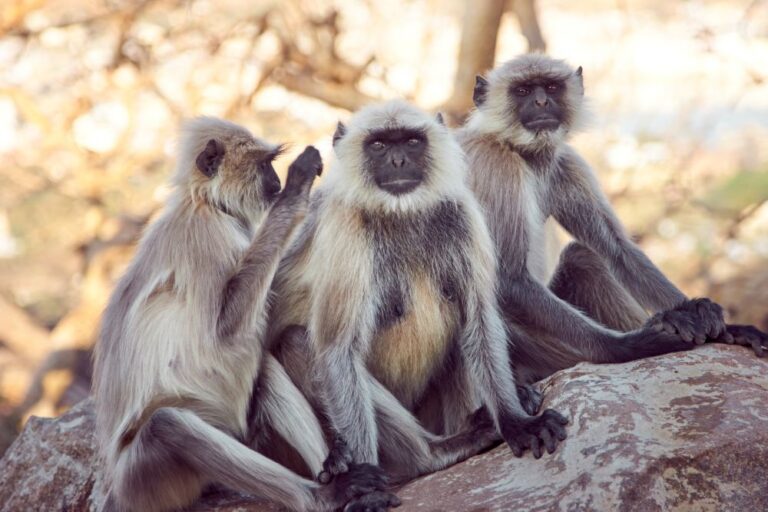
What I value most in this work is the time spent with local Himalayan communities. Sitting with people, sharing what I know, and learning from their way of life, gives the work a meaning that goes beyond research. Their understanding of the landscape, and their perceptions of change, especially the steady push of urbanization...offers a perspective that is both grounded and honest.
My interest in langurs developed gradually around 2020, while I was reading about endangered species in Pakistan. I came across the Kashmir grey langur in the literature and realized that, despite my background in zoology, I knew very little about its ecology, distribution, or conservation status in Pakistan. What stood out most was how little consolidated information existed about a species that was clearly part of our broader mountain landscapes, yet remained largely unstudied and unnoticed in a scientific sense. That curiosity slowly pushed me toward exploring it further.
Over time, this led me into the field in northern Pakistan, where I began trying to understand its possible habitats through observations and discussions with local communities. Since there are no captive populations, any understanding has to come from the wild, which makes field confirmation particularly important.
I still remember the first confirmed sighting in 2021. It was distant, brief, and not dramatic at all, just a quiet presence in the forest canopy. But after a long period of uncertainty, it felt like a meaningful confirmation that the species still persists in that landscape. That moment stayed with me, not for its visual impact, but for what it represented in terms of persistence and the importance of field-based knowledge.
What I value most in this work is the time spent with local Himalayan communities. Sitting with people, sharing what I know, and learning from their way of life, gives the work a meaning that goes beyond research. Their understanding of the landscape, and their perceptions of change, especially the steady push of urbanization, which I am not particularly fond of, offers a perspective that is both grounded and honest.
At the same time, the work is not without its challenges. The landscapes are physically demanding, with steep trails, long distances, and difficult access often shaping how much can be done in a day. There are also limitations in resources and institutional support, which can slow progress and require a great deal of independence and patience. More broadly, working with a species that is poorly studied means dealing with uncertainty—sometimes there is little data to guide decisions, and progress comes slowly. But in many ways, these challenges are part of the process. They shape how one approaches conservation, and they make each small understanding feel more meaningful.
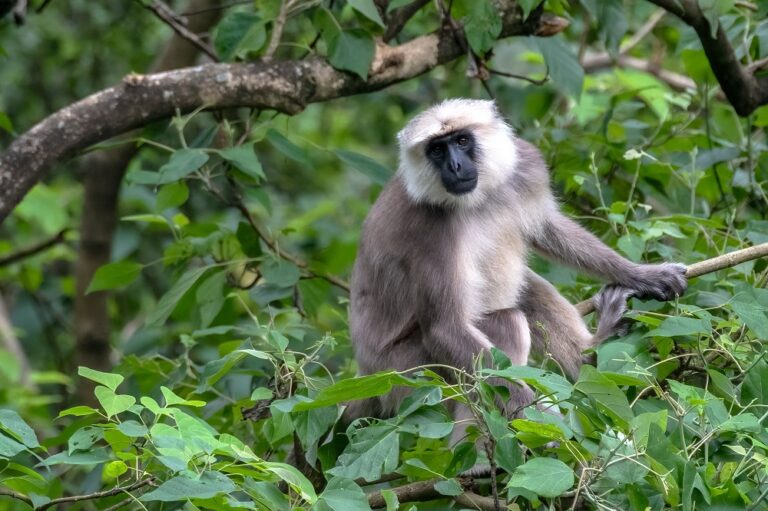
Well, encouraging people to care about species like the Kashmir gray langur is not only a matter of sharing information, it is a matter of building familiarity. Over the years, I have come to feel that people protect what they recognize as part of their own world, even if they never see it directly.
For many, these animals will remain distant, so the role of conservationists and educators is to bring them closer in simple, honest ways. Not through complexity, but through stories—how these primates live, how they move through forests that also support human life, and how quietly they persist in changing landscapes. When people begin to understand that such species are part of their natural heritage, a sense of connection often follows. I have also learned that local voices matter as much as scientific ones. The way communities describe landscapes, seasons, and wildlife often carries a depth that resonates more naturally with others. Sharing those perspectives can help bridge the gap between science and public understanding.
In the end, appreciation grows slowly. It does not come from urgency alone, but from repeated, meaningful exposure—through stories, images, and conversations that make a distant species feel present. When that happens, even unseen animals begin to matter.
In my understanding from working and observing in the Himalayan Mountains of Pakistan, including parts of Azad Jammu, Kashmir, and the Kaghan valley in Khyber Pakhtunkhwa, langur–human conflict is best seen as a landscape interface issue rather than a single direct cause. It develops gradually as land-use patterns change and the overlap between wildlife and people increases. From what I have observed, the main driver is habitat modification and fragmentation. Forests are not always completely lost, but they are increasingly broken into smaller and more isolated patches due to agricultural expansion, fuelwood collection, grazing pressure, and infrastructure development. This reduces canopy continuity, and as a result, langur groups are often forced to move through or forage closer to human-dominated areas.
Closely linked to this is the edge effect between forests and agriculture. In many of these valleys, villages and croplands are directly adjacent to forest patches. Since langurs naturally have relatively large home ranges…this proximity makes encounters with people and crop fields more frequent, and crop-raiding becomes an occasional, but noticeable issue.
Another factor I have noticed is the variation in natural food availability at local scales. When forest quality is reduced, especially in terms of native broadleaf vegetation, langurs may opportunistically use cultivated crops. This does not necessarily represent a permanent shift in
their diet, but it can become more visible during certain seasons or in more degraded patches. I would also say that human response plays an important role in shaping the intensity of conflict. In some areas, langurs are tolerated, but in others, chasing or disturbance changes their
movement patterns and can push them further toward forest edges, which may unintentionally reinforce the cycle of interaction.
In a few accessible valleys, like in Shogran, I have also noticed that unregulated tourism can contribute indirectly. Increased human presence in forest areas, and in some cases, feeding or close interaction, can influence animal behavior. However, this is highly context-dependent and
tends to be localized where tourism is more concentrated and less regulated.
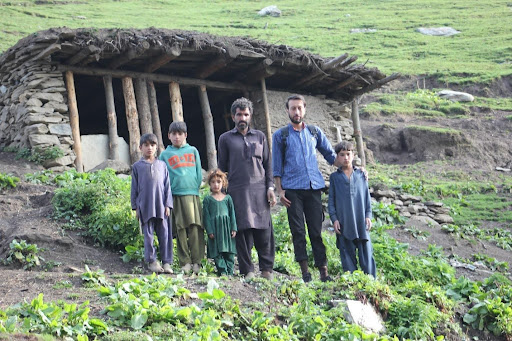
Yes, one of the most rewarding experiences in my fieldwork was documenting a previously unreported small group of Himalayan gray langurs in the Punja Gali area of Mansehra District. This site is located in the northwestern mountainous belt of the Mansehra–Hazara region, within
the western Himalayan foothills of northern Pakistan. This area represents a fragmented mountain forest landscape composed of interconnected ridge forests and human-influenced mosaics.
From a broader biogeographic perspective, this finding is significant because the Kashmir gray langur is a range-restricted primate, from the Indian Himalayan regions into Kashmir, and becomes increasingly fragmented toward its western extent in Kaghan, Pakistan. In this region, populations become increasingly dispersed, though they persist in isolated forest patches across the Himalayan foothills, before the broader ecological shift toward the Indus-facing landscapes further west.
What makes this observation important is that it highlights how small and overlooked forest patches within these foothill systems can still support remnant primate groups, even outside well-known protected areas. However, this remains an open question to say if such range extension in Punja Gali is permanent or due to migration.
From my perspective, the future of langurs in the Himalayan foothills is closely tied to changing land use, forest quality, and human attitudes toward wildlife. On the positive side, langurs are relatively adaptable and can survive in fragmented forest landscapes as long as some canopy cover and native vegetation remain. In many areas, they persist close to villages and human settlements, which suggests that coexistence is possible if habitats are maintained and local tolerance remains strong.
My main concern is the gradual loss of habitat quality and connectivity. As forests become increasingly fragmented, small groups can become isolated, making populations more vulnerable over time. In some areas, growing human–langur interactions, especially related to crop damage, are also reducing tolerance toward the species. In addition, localized hunting or persecution still occurs in certain regions, sometimes opportunistically or recreationally, adding further pressure.
At the same time, I remain cautiously optimistic. I believe long-term conservation is still possible if efforts focus on maintaining forest connectivity, improving coexistence at the community level, and generating better ecological understanding of the species.
With this vision in mind, we recently launched the Pakistan Himalayan Langur Project, which aims to build long-term research and conservation efforts around the species through field ecology, community engagement, and landscape-level conservation planning in northern Pakistan.
My main concern is the gradual loss of habitat quality and connectivity. As forests become increasingly fragmented, small groups can become isolated, making populations more vulnerable over time. In some areas, growing human–langur interactions, especially related to crop damage, are also reducing tolerance toward the species. In addition, localized hunting or persecution still occurs in certain regions, sometimes opportunistically or recreationally, adding further pressure.
If langurs and other primates were to disappear from these Himalayan ecosystems, the impacts would extend far beyond the loss of a single species.
From an ecological perspective, primates like langurs play an important role as seed dispersers and forest structure shapers. Many of the plant species in Himalayan forests depend, directly or indirectly, on animals for seed movement and regeneration. If they are removed, we would likely see changes in forest composition over time, with reduced regeneration of certain native tree species and a gradual shift in forest dynamics. This can weaken overall ecosystem resilience.
For other wildlife, the loss of primates would also mean the removal of an important component of the food web and forest interaction network. Even if they are not a dominant prey species, their role in maintaining vegetation structure and creating microhabitat conditions indirectly supports many other organisms.
For humans, the effects would be more indirect but still significant. Forest degradation is linked to the loss of ecological functions, which can contribute to reduced ecosystem services such as soil stability, water regulation, and long-term forest productivity, all of which are important in mountainous regions like the Himalayas. In addition, losing a visible and culturally familiar species can also weaken the human connection to biodiversity in these landscapes.
This is why primate conservation is important; it is not only about protecting one group of animals, but about maintaining ecological processes, forest health, and long-term landscape stability. In highly fragmented systems like the western Himalayas, primates can also serve as useful indicator species, reflecting broader environmental changes that may not yet be visible at first glance. So in my point of view, their loss would not just be a wildlife issue, but a broader ecological and socio-environmental change affecting forest integrity and human–nature
relationships.
Well, personally, I reckon one of the most important things people can do for conservation, both globally and locally, is to recognise how closely everyday choices are linked to wildlife and habitat loss.
At a global level, I am not a policy expert, but I think reducing overall environmental pressure through more sustainable consumption really matters. Things like responsible sourcing, reducing waste, and being mindful of carbon footprint all indirectly reduce pressure on forests and wildlife habitats. Supporting science-based conservation initiatives and protected area systems also makes a difference, even if it feels indirect at the individual scale.
At a more societal level, I would say public awareness and support for biodiversity-friendly policies are critical, because most large-scale conservation outcomes are ultimately shaped by governance and land-use decisions.
Locally, especially in places like the Himalayas, I think the impact becomes much more direct. Simple things like respecting wildlife, avoiding disturbance or feeding of animals, and supporting community-based forest management can go a long way. In human–wildlife interface
areas, even small decisions about cropping patterns or tolerance at forest edges can influence conflict levels quite significantly. So overall, I personally feel conservation is not just about experts or protected areas—it is about a shared responsibility, where global awareness and local behaviour together shape whether species and ecosystems persist or decline.
Well, I think one thing I would add, based on my field experience, but also as a general reflection, is that science-based conservation is still not fully integrated into decision-making in many regions, especially in developing mountain landscapes like the Himalayas of Pakistan.
I am not saying this in a critical way toward any one system, but rather as an observation that often there is a gap between ecological data and on-ground management. In many cases, decisions are still driven more by short-term socio-economic pressures, while long-term ecological monitoring and evidence-based planning remain limited.
Personally, I guess, this gap is one of the biggest challenges for conservation going forward. We may have increasing scientific tools—like habitat modelling, remote sensing, and field ecology—but unless that information is consistently translated into policy and community-level
action, its impact remains limited.
So overall…I would say: stronger integration of science into policy, and more practical coexistence-based approaches on the ground are both essential if we want conservation to be effective in the long term.
Except where otherwise noted, photos and graphics courtesy of ©Kurnia Ilham