
Blond Titi, Callicebus barbarabrownae
BLOND TITI
Callicebus barbarabrownae
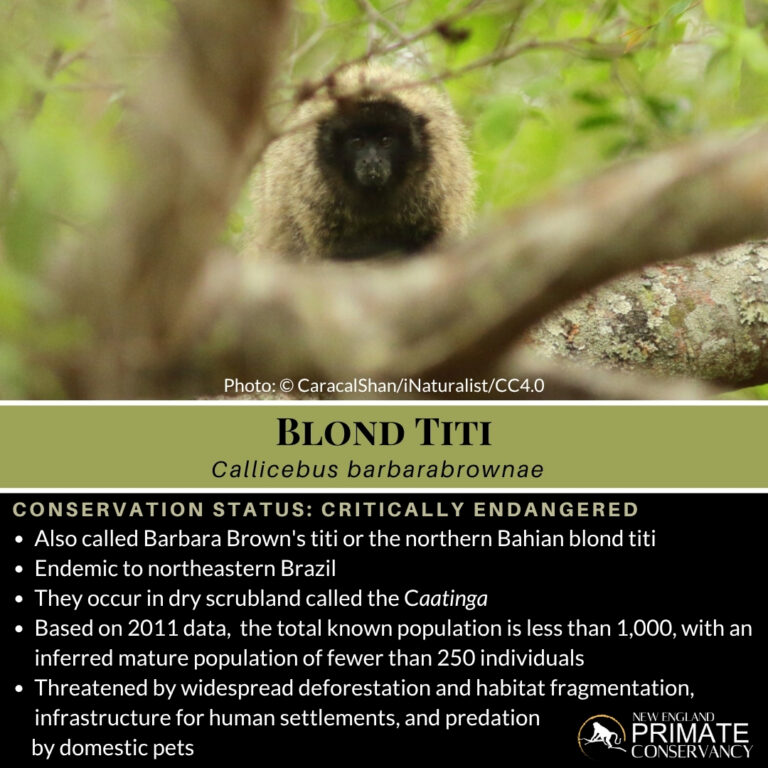
Geographic Distribution and Habitat
The blond titi, also known as the Barbara Brown’s titi or the northern Bahian blond titi, is native to the Caatinga in northern Brazil. What’s the Caatinga? It was certainly something I had to look up!
The Caatinga is an ecoregion which derives its name from the semi-arid tropical vegetation of the same name in interior northeastern Brazil. It’s a dry shrubland and thorn forest containing short, thorny trees that shed their leaves seasonally. Cacti, thick-stemmed plants, thorny brush, and arid-adapted grasses make up the ground layer of the Caatinga. Most vegetation in the area experiences a brief burst of activity during the three-to five-month-long rainy season from January through May, with the heaviest rains falling from February to April. The dry season, in contrast, lasts for around seven to nine months, between June and December. The average annual rainfall varies between 9.84-39.8 inches (250-1,000 mm), and the average annual temperature is between 75-79ºF (24-26ºC).
Though the Caatinga is vast, the blond titi is found in the states of Bahia and Sergipe at approximately 787-2,953 feet (240-900 m) above sea level, from the Paraguaçú River basin to the border between the aforementioned states along the margins of the Real River. Most of the population is found between the Paraguaçú River and Salvador Municipality, and west towards Mirorós Municipality. In fact, the blond titi is the only primate endemic to the Caatinga, a biome characterized by high temperatures, seasonal drought, irregular rainfall, thorny dry forests, and extraordinary habitat fragmentation.
Due to the Caatinga’s long dry seasons and short, unpredictable rainy seasons, food availability changes dramatically throughout the year. During wetter periods, trees produce more fruits, flowers, and young leaves, which are important resources for titis. In dry periods, vegetation becomes sparse, and many trees lose their leaves, forcing the monkeys to rely more heavily on tougher leaves or whatever scattered food resources remain available. These seasonal fluctuations likely influence their daily movement patterns and activity levels in order to help them conserve water and energy in the harsh semiarid climate. Blond titis are closely associated with patches of dense arboreal Caatinga as well as semi-deciduous forest since these habitats provide more continuous canopy cover, shade, and food than the surrounding thorn scrub. Forest cover is especially important in the Caatinga, because exposed open areas can become extremely hot and dry during the day. Tree cover also helps maintain cooler and more humid microclimates that are safer for arboreal primates like the blond titi. Environmental conditions in the Caatinga also affect how populations are distributed. Since suitable forest habitat is naturally patchy — and has become even more fragmented through human actions such as agriculture, cattle ranching, and deforestation — titi groups are often isolated in disconnected forest fragments. Fragmentation is particularly harmful in a dry biome because monkeys may be reluctant or unable to cross open, sun-exposed terrain lacking canopy connections. This isolation can increase stress, reduce genetic diversity, and intensify competition for limited resources inside remaining habitat patches. Even more, researchers have found that blond titi densities may actually become higher in disconnected fragments because groups become crowded into the few remaining suitable forest patches. This “crowding effect” is not beneficial in the long term. High densities in isolated areas may lead to increased disease transmission, social stress, and resource depletion.
Though the blond titi was once considered a subspecies of the Atlantic titi (C. personatus), anatomical and genetic evidence support their status as a full species.
Size, Weight, and Lifespan
Information on the size, weight, and lifespan of the blond titi is lacking, and some information needs to be inferred from other titi species. Warning: this will become a recurring theme in this profile! This is because the blond titi is rare and poorly studied.
Their weight is unknown, and measurements regarding males are also unknown. The lifespan of most titi monkeys has not been clearly determined, but individuals in the genus Cheracebus (one of three genera of titi monkeys, but not that of the blond titi) may live up to 12 years in the wild.
What is known is that the head-body length of females ranges from 13.0-14.2 inches (33-36 cm), and tail length for females ranges from 15.6-16.9 inches (39.5-43 cm). Sexual dimorphism, or noticeable physical difference between genders, has not been observed among blond titis.
Appearance
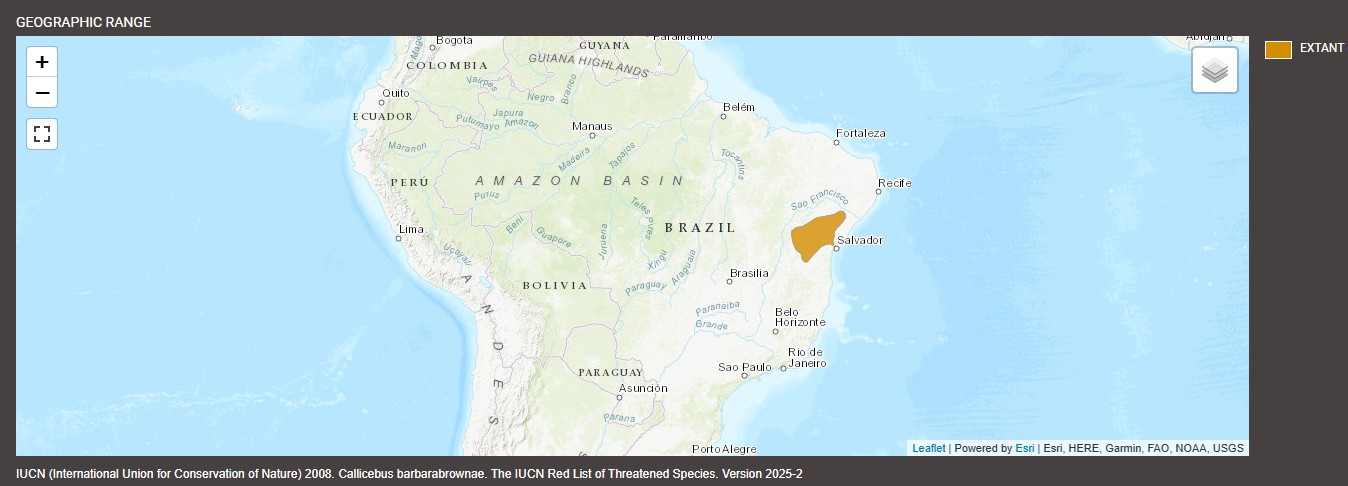
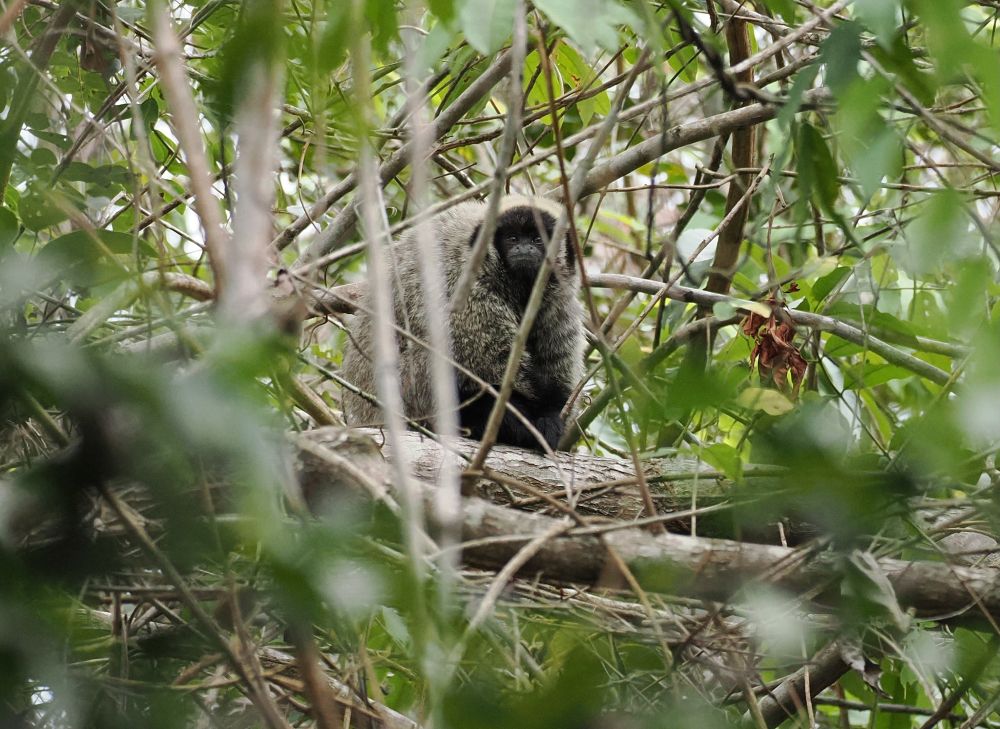
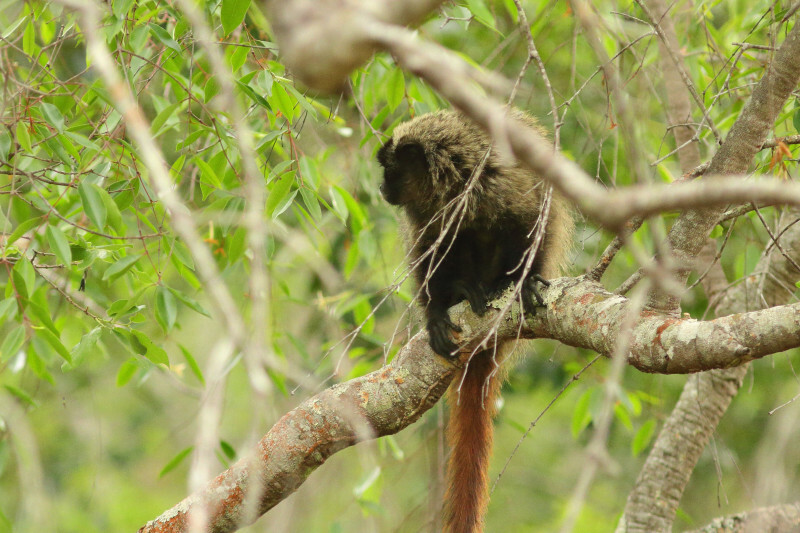
The body, crown, sideburns, throat, and limbs of this adorable monkey are buff or blond colored, which contrasts with the dark black hands, feet, forehead, and face. The base of the tail is yellowish, with the rest sporting orangey-brown coloration. The back and sides of the body are pale, with black hair roots, creating a noticeable stippling or banding effect. Contrasting these black roots, the upper arms and thighs are paler, and the belly is primarily buff. In addition, at least three distinct color variants among blond titis have been recorded in the field, ranging from a predominantly grayish to a predominantly brownish coloration. These variations may help them blend in with their scrubby, dry habitat.
The tail is non-prehensile and not used for grabbing or grasping, but rather, to aid in balancing among the branches, and to entwine with the tail of other family members as a means of reinforcing bonds.
Diet
In a first for me, I’m writing about a species whose diet is unknown! As they are arboreal, or tree-dwelling, titis as a whole are primarily frugivorous (fruit-eating), with a diet consisting mainly of fleshy fruits, leaves, and insects. They are opportunistic feeders, supplementing their diet with seeds, flowers, and occasionally small birds or lizards, especially in the dry season.
Clearly, more research is needed regarding the specifics of the diet of the blond titi.
Behavior and Lifestyle
The blond titi is arboreal and diurnal, meaning it is most active during the day. Besides this, very little is known about the behavior and lifestyle of the blond titi, and it must be inferred from other species until more thorough research is conducted.
What is known is that they rarely descend to the ground and use all four limbs (quadrupedalism) to navigate their environment. They use their rear limbs to jump long distances and their leading forelimbs to grasp onto branches. While resting, they hunch their bodies, hanging their tails over a branch. This way of getting around is adapted to the structure of Caatinga scrubland and semi-deciduous forest, as trees are often shorter, have more gaps between them than in dense rainforests, and their branches may be thin or irregular. A small-bodied monkey adapted for agile climbing and leaping is well-suited to navigating this patchy environment. Titis as a whole have several traits useful for this kind of movement: relatively long hind limbs for leaping, grasping hands and feet, flexible joints, and a long tail used mainly for balance. Rather than making extremely long leaps or traveling quickly across huge areas, titis usually move carefully through established routes inside a relatively small home range. This cautious movement helps to reduce their exposure to predators, conserve energy in a resource-limited environment, and to maintain familiarity with food trees.
Titi monkeys as a whole are most active during the early morning and late afternoon, when they forage for food. They usually rest during the middle of the day, when temperatures are at their highest. In the semiarid Caatinga, daytime temperatures can become intense, so conserving water and energy is important! A typical daily activity budget for the blond titi likely includes: substantial time spent feeding and foraging; long resting periods; moderate amounts of time spent traveling through the canopy; smaller, but socially important periods of grooming and pair bonding; as well as continual vigilance for predators.
Studies of other titi monkey species often find that resting occupies a very large portion of the day — sometimes around one-third to one-half of total activity time — with feeding and movement making up most of the remainder. Blond titis likely follow a similar pattern, perhaps with even more time spent resting during the hot dry season.
Because fruit availability in the Caatinga fluctuates strongly with rainfall, feeding behavior very likely changes seasonally. During wetter periods, blond titis may spend more time feeding on abundant fruit resources and less time traveling. During dry periods, when food is scattered and many trees lose leaves, they may travel farther, feed more selectively, rely more heavily on leaves or supplemental foods, and reduce energy expenditure by resting longer and more frequently. Their small group sizes also likely reflect the patchy food supply of dry forests, since smaller groups need to compete less intensely for limited resources.
Blond titis, like other titis, most likely sleep directly on tree branches, often in dense vegetation and likely close together as bonded family groups. No nests here!
Once again, because the blond titi is rare and poorly studied, we are unsure which animals, except for domestic dogs and cats, eat titis. However, based on observations of other titi monkeys and the predator community of the Caatinga and Atlantic Forest transition zones of northeastern Brazil, several animals are likely predators. These include birds of prey, wild cats, and large snakes. The environmental conditions of the Caatinga likely influence predation risk. Since the Caatinga is heavily fragmented and seasonally dry, blond titis may sometimes need to cross exposed canopy gaps or use lower vegetation layers, making them more visible to predators. During the dry season, when many trees lose leaves, reduced canopy cover may also make hiding more difficult. The blond titi’s preference for denser arboreal Caatinga and semi-deciduous forest patches may partly reflect their need for cover from predators, as well as food availability. Like other titi monkeys, they probably rely on several anti-predator strategies: staying in small cohesive family groups, using alarm calls, freezing or hiding in dense vegetation, rapidly fleeing through the canopy, and remaining highly vigilant at forest edges.
What’s in a Name? The blond titi, also known as Barbara Brown’s titi, was named after American zoologist and philanthropist Barbara Elaine Russell Brown.
Surprise, surprise (not!), very little is known about the daily life and group dynamics of the blond titi, and it must be inferred from other species.
What is known is that family groups range from two to four individuals, consisting of a breeding pair and their immature offspring, and the low end of a group’s home range is 123.5 acres (50 ha). The blond titi appears to occur at very low densities at most sites. Two small groups (breeding pairs) in an isolated 284-acre (115 ha) fragment of arboreal Caatinga in Sergipe suggest a home range of around or more than 123.5 acres (50 ha).
Among titis, juveniles typically remain with the family group for several years before dispersing at around sexual maturity. Titis often show dispersal by both males and females, though the exact pattern can vary among specific species and populations. Once again, such information regarding the blond titi is not known, but it’s likely that both genders leave the natal group to avoid inbreeding.
In many titi species, the exact size of home ranges varies based on habitat quality and is shaped by food distribution, vegetation density, water availability, and territorial interactions. In the Caatinga, resources are patchy and seasonal, so when fruit is abundant during the rainy season, blond titi groups may meet their nutritional needs within smaller areas. In contrast, during the dry season, food becomes more dispersed, fallback foods (those other than their preferred fruit) become important, and groups may need to travel more widely within their territory. Low-quality or fragmented habitat may force larger ranging behavior despite the titis’ generally energy-conserving lifestyle.
Since titi groups are small, their food requirements are lower than those of larger primate troops. This allows them to survive in relatively small territories as compared with many other monkeys.
Generally, titi monkeys are quite territorial, and blond titis may be as well. Neighboring groups may defend territories through vocal duets from the breeding pair, chases, visual displays, and patrolling boundaries. In a dry and seasonal ecosystem like the Caatinga, defending food resources is especially important because high-quality feeding trees can be limited and unevenly distributed. Despite this information on territorial behavior, specifics regarding the blond titi are simply not known. They are the only primate found in their ecoregion, so there is no association with other primate species.
Blond titis have been reported producing loud calls similar to those of other titi species, especially territorial vocalizations, contact calls, and alarm calls. The few field researchers who have observed blond titis have noted vocal activity as an important method for locating groups in fragmented forest patches. The male(s) of a blond titi group will lead foraging expeditions, using a wide array of visual signals and vocalizations to communicate with the rest of the group. Besides that… guess what!? Nothing else is known about blond titis, and it has to be inferred from other species! (Are you annoyed with me, yet?) The following information pertains to titis as a whole.
Titis are especially known for coordinated duetting behavior between pair-bonded adults. In these duets, the male and female call together in synchronized patterns, often during the early morning and sometimes in response to neighboring groups. These duets are important for maintaining territorial spacing, advertising occupancy of a home range, and reinforcing pair bonds (how romantic!) In titis, alarm calls differ depending upon the context of the disturbance. They may become sharper or more repetitive when detecting potential threats.
Documented visual communication in titis includes body posture, tail positioning, piloerection (raising fur), and coordinated movement between group members. Titi monkeys are relatively subtle in their use of facial signaling compared to some more social primates like macaques and baboons. Published studies emphasize vocal and tactile communication more heavily than facial displays. However, visual displays can occur during territorial encounters, vigilance, or situations involving a disturbance. For example, individuals may turn their bodies toward intruders, stand alert, or become rapidly agitated while shaking branches. Tail behavior is also socially important in titis. Breeding pairs are well known for sitting together with tails intertwined, a highly visible friendly signal.
Tactile communication is extremely important in titis and is one of their defining social characteristics. Documented tactile behaviors include grooming, sitting in physical contact with one another, hugging, carrying infants, and that all-important tail intertwining. Play behavior among juveniles includes chasing, wrestling, and gentle physical interaction, which likely contributes to motor skill and social development.
Titis also possess scent glands, and some species scent-mark their territories by rubbing their chests or anogenital regions on branches, depositing scent during territorial activities. However, detailed studies of scent-marking are far less extensive in titis than in some other primates of the Americas, such as marmosets or tamarins.
What is known about blond titi reproduction and family care is that couples form monogamous (one male-one female) breeding pairs, and females give birth annually to a single offspring during the wet season after a gestation (pregnancy) period of five to six months. Juveniles grow quickly, reaching their adult size within 10 months! Both parents play active roles in caring for the infant, especially Dad! He mainly transports the infant on his back, and occasionally on his belly or side when the precious cargo is especially young. He only passes the baby to Mom to nurse. Besides this “wealth” of knowledge, everything else must be inferred from other titi species.
Generally among titis, sexual maturity is reached at roughly two to four years of age, with males maturing slightly later than females. Young usually disperse near or after reaching sexual maturity to avoid inbreeding and eventually form new pair bonds with unrelated individuals.
Reproductive behavior, particularly reproductive readiness signaling, is relatively subtle, and there is little evidence of dramatic anogenital swellings or other noticeable signals of sexual receptivity. Documented reproductive-associated behaviors in titis include increased body contact between pair members, grooming, close following of one another, and vocal coordination. Chemical communication may also play a role. Some titi monkeys engage in scent-marking behaviors, though the reproductive function of these signals has not been extensively described.
In general, titi infants nurse for several months, with weaning often occurring at around four to six months of age. Social dependence continues until sexual maturity is achieved. As infants mature, they gradually spend more time exploring independently, feeding on solid foods, and interacting with other group members. Juveniles engage in social play, closely follow the adults, observe feeding behavior, and participate in group movement. Play can include chasing, mock fighting, climbing, and exploratory leaping, which help develop locomotive skills, social familiarity, and knowledge about the environment. As juveniles age, they begin traveling independently, spend less time being carried, and forage on their own more consistently. However, they generally remain integrated within the family group until they leave at or near sexual maturity.
If the blond titi’s diet is like that of other titi monkeys, then by eating fruits and seeds, they help to regenerate their scrubland habitat by dispersing seeds through their feces during their daily travels. They may also help to keep pest populations under control by eating insects. Finally, as a prey species, they also help maintain local predator populations within their habitat.


The International Union for Conservation of Nature lists the blond titi as Critically Endangered (IUCN, 2015), appearing on the IUCN Red List of Threatened Species.
The blond titi is found in an area of Brazil plagued by widespread deforestation and habitat fragmentation, and is characterized by rapid development facilitated by an extensive network of highways. The main threats facing this monkey are agriculture, cattle ranching, and urbanization. Other threats include dangers from roads, power lines, and predation by domestic pets. Hunting pressure by humans needs to be determined, but it is probably low due to the titi’s small body size. During surveys, a few individuals were found as pets by locals. It is estimated that fewer than 250 mature individuals remain.
The blond titi is listed in Appendix II of the Convention on International Trade in Endangered Species (CITES), an international agreement between governments whose goal is to ensure that international trade in specimens of wild animals and plants does not threaten their survival.
The blond titi has been found in three protected areas within their range: Orobó Area of Relevant Ecological Interest, Chapada Diamantina National Park, and Marimbus-Iraquara Environmental Protection Area. Despite having been recorded as being found in the Raso da Catarina Ecological Station, this has not been confirmed by scientists, conservationists, or government officials.
Several organizations, including the Brazilian Institute for the Environment, are working to promote the study and protection of Brazil’s threatened primates. The organization Conservation International is also helping to establish a Central Biodiversity Corridor, which aims to connect fragmented forests, while the World Wildlife Fund (also known as the World Wide Fund for Nature, WWF) is developing an overall conservation strategy for Brazil’s Atlantic forests.
Additional monitoring of the blond titi’s population trends, further actions to protect and manage both land and water in and around the Caatinga of Brazil, and boatloads of research on the ecology and life history of the blond titi are all needed should this rare and enigmatic primate of South America be retrieved from the brink of extinction.
- https://www.alltheworldsprimates.org/Members/Home/MasterPrimate.aspx?tid=680
- https://animalia.bio/barbara-browns-titi
- https://www.bioexplorer.net/animals/mammals/monkeys/barbara-browns-titi/
- https://www.cambridge.org/core/journals/oryx/article/distribution-and-status-of-the-critically-endangered-blond-titi-monkey-callicebus-barbarabrownae-of-northeast-brazil/E88B1D9619DFA8F75575B4C7F9C07CAC
- https://en.wikipedia.org/wiki/Barbara_Brown%27s_titi_monkey
- https://en.wikipedia.org/wiki/Caatinga
- https://en.wikipedia.org/wiki/Titi_monkey
- https://feow.org/ecoregions/details/326
- https://www.iucnredlist.org/species/39929/191703041
- https://kids.kiddle.co/Barbara_Brown%27s_titi_monkey
- https://nationalzoo.si.edu/animals/titi-monkey
- https://www.neoenergia.com/en/w/caatinga-bioma-100-brasileiro
- https://www.oneearth.org/ecoregions/caatinga/
- https://openurl.ebsco.com/EPDB%3Agcd%3A3%3A38586099/detailv2?sid=ebsco%3Aplink%3Acrawler-gcd&id=ebsco%3Agcd%3A175361213&crl=c&jrnl=01640291&link_origin=none
- https://primate.socgen.ucla.edu/index.php/multivitaminic/article/view/78
- https://www.sciencedirect.com/science/article/abs/pii/S1055790316304250
- https://www.sciencedirect.com/science/article/pii/S1617138126000932
- https://tb.plazi.org/GgServer/xhtml/8477905E8644C3562D26A7E117C4F412
Written by Sienna Weinstein, June 2026