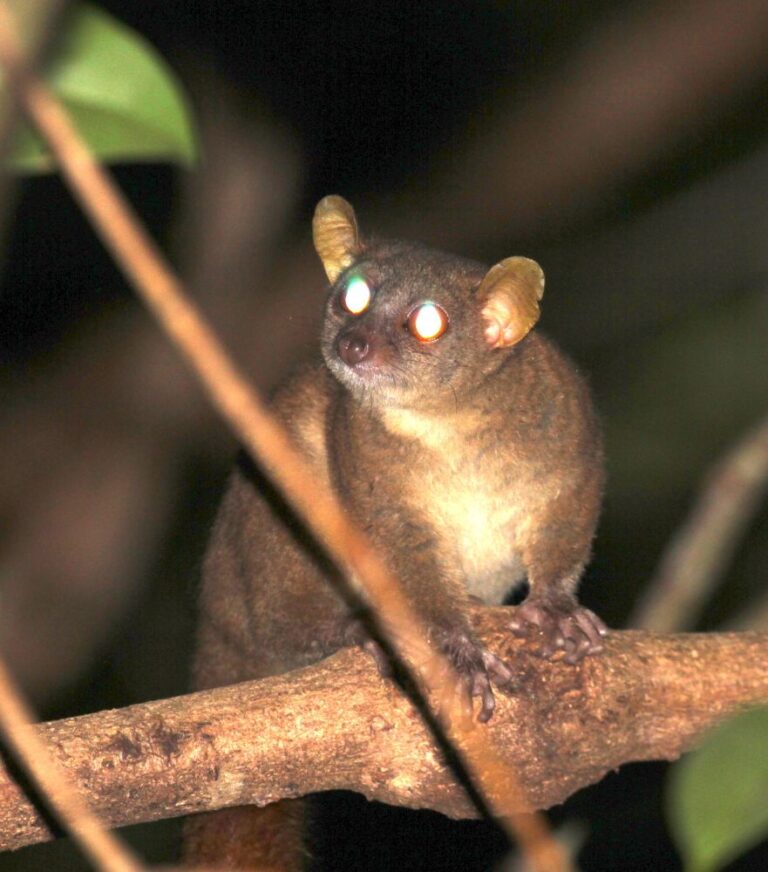
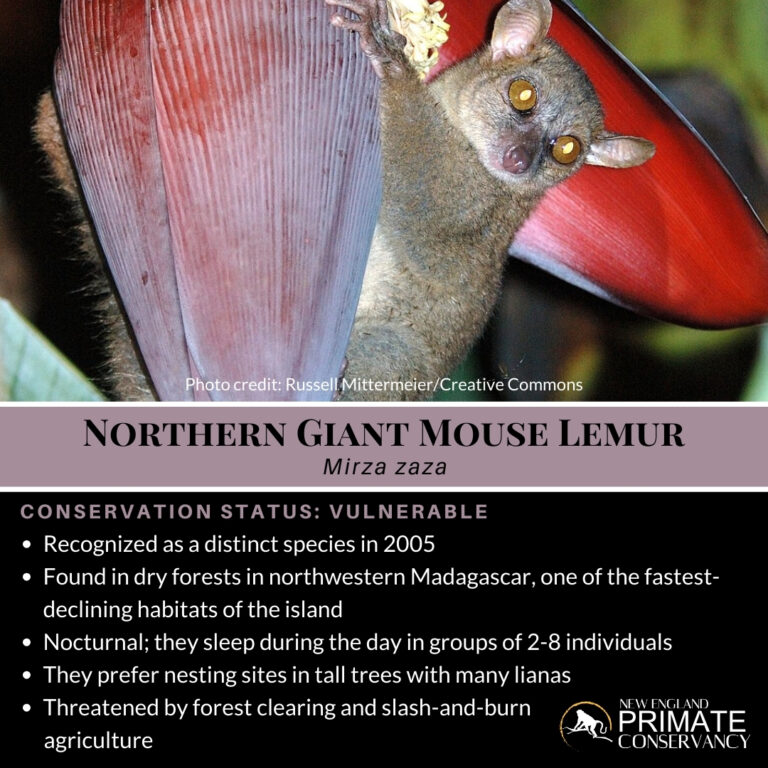

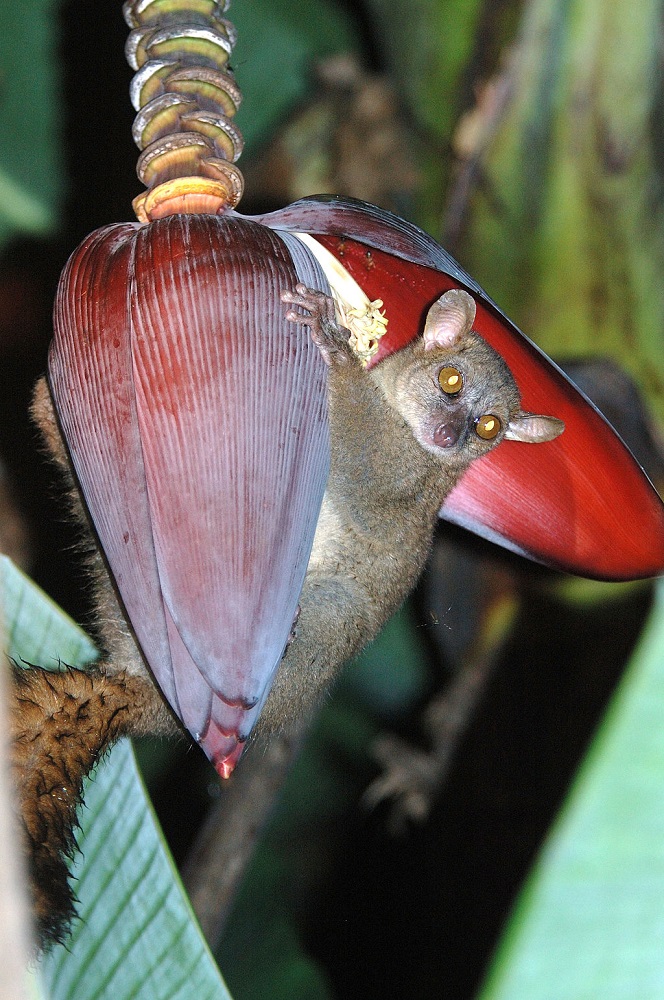
Northern giant mouse lemurs are nocturnal, meaning they are active at night and sleep during the day. Although most of their activity occurs at night, one study recorded individuals active during daylight hours, suggesting they may have a more flexible sleep–wake pattern than previously thought. This has raised the possibility that the species could be cathemeral (active during both day and night), though more research is needed to confirm this.
One study found that northern giant mouse lemurs spent about 65.3% of their waking time moving, 14.6% feeding and foraging, 13.4% resting or sleeping, 5.7% grooming, and about 1% engaged in social activities.
Northern giant mouse lemurs are arboreal, meaning they live in trees. When active, they typically remain less than 82 feet (25 m) above the ground, though on average they stay about 23 feet (7 m) above the forest floor.
A key difference between the northern giant mouse lemur and Coquerel’s giant mouse lemur is their sleeping behavior. Northern giant mouse lemurs sleep with both related and unrelated members of their species. During the day, they rest in spherical nests up to about 19.7 inches (50 cm) in diameter, constructed from twigs, lianas, branches, and leaves. At night, groups of two to four individuals—males and females of different ages—sleep together in these nests.
In a study of northern giant mouse lemurs in the Ankarafa Forest, nests were typically well covered by the forest canopy, even during the dry season (May–October). They were built in the tallest and largest trees in the forest, which often had more lianas (woody vines) than surrounding trees. Researchers suggest that these trees may be selected because they provide better protection from predators. The nests themselves were usually located close to the tree trunk, several meters below the top of the tree.