
Groves’ Dwarf Lemur, Cheirogaleus grovesi
GROVES' DWARF LEMUR
Cheirogaleus grovesi
Geographic Distribution and Habitat
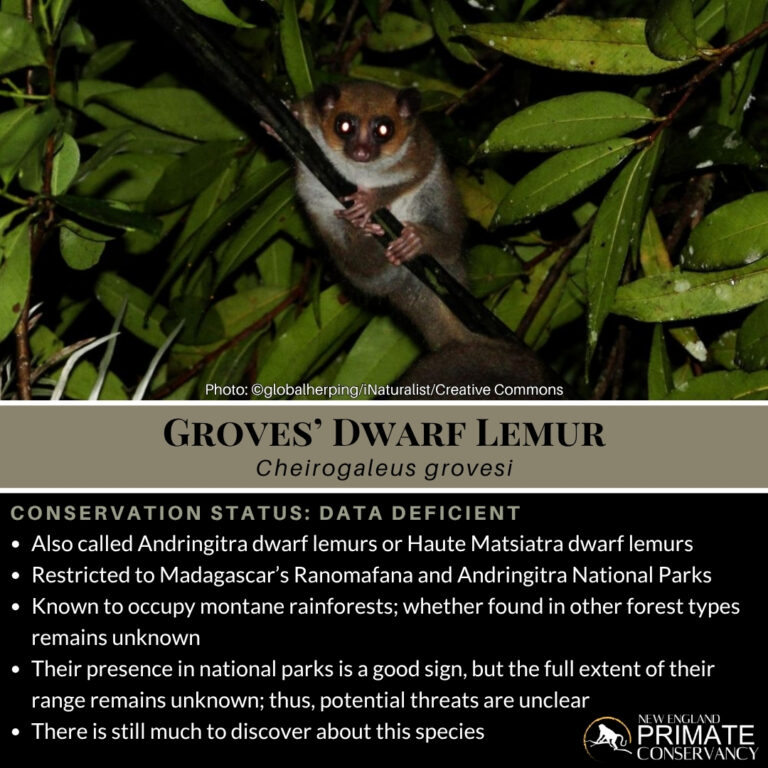
The Groves’ dwarf lemur, like all lemurs, is found exclusively on the island of Madagascar—a globally recognized biodiversity hotspot off Africa’s southeastern coast. So far, it has only been documented in four locations, all within the mountain rainforests of Ranomafana and Andringitra National Parks in southeastern Madagascar, at elevations ranging from 2,296 to 3,280 feet (700–1,000 meters) above sea level.
These elusive primates are heavily dependent on tree hollows for nesting, making old-growth forests vital to their survival. Mature forests not only provide essential shelter but also support the complex canopy structure necessary for their arboreal lifestyle and protection from predators.
The IUCN currently recognizes ten distinct species of dwarf lemurs, all originally grouped under the genus Cheirogaleus. As scientific understanding of their diversity has improved, their classification has become increasingly refined.
The path to uncovering this diversity has been both lengthy and complex. Western researchers first described dwarf lemurs in 1812. Although early observations hinted at the existence of multiple species, limited field research throughout the 19th and 20th centuries hindered further investigation. For much of this time, knowledge of dwarf lemurs was based largely on museum specimens—many of which had vague or unreliable geographic data.
In 1967, a detailed study of skull and tooth shape led to the reclassification of the hairy-eared dwarf lemur into its own genus, Allocebus. More recently, advances in genetic research have revealed even more diversity within Cheirogaleus, leading to the recognition of several new species.
The Groves’ dwarf lemur is one of the most recent to be identified. It was recognized as a unique species in 2014 based on genetic and physical evidence, but it wasn’t officially described until 2017. That description was based on just four individuals studied in the wild. Even now, very little is known about this species, and research is still very limited.
In 2025, NEPC interviewed Adam McLain, one of the scientists who helped identify and describe the Groves’ dwarf lemur.
Size, Weight, and Lifespan
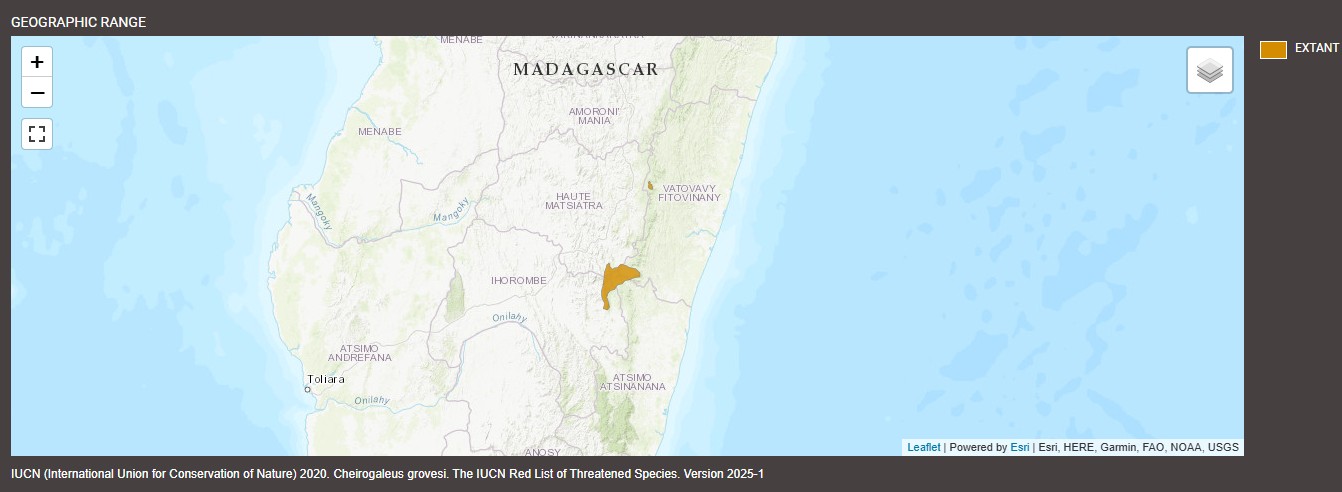
Dwarf lemurs are named for their small size, though they are still larger than their close relatives, the mouse lemurs. Based on four observed individuals, the average Groves’ dwarf lemur weighs just under a pound (404 grams) and has a body length of 6.7 inches (17.1 cm).
One of the most noticeable features of dwarf lemurs is their long tail, which in many species is similar in length to their body. However, Groves’ dwarf lemurs appear to have even longer tails than others in the group, averaging about 11 inches (27.7 cm) in length.
Other dwarf lemurs store fat in their tails to help them survive the dry season, when food is scarce. During this time, they enter a state of hibernation—or, in some species, a lighter form of dormancy called torpor. In many species, the size of the tail and body weight change a lot during the year as they build up fat for hibernation. These seasonal changes have not yet been studied in Groves’ dwarf lemurs.
The average lifespan of dwarf lemurs in the wild is still not well known. In captivity, however, fat-tailed dwarf lemurs have lived for up to 29 years. This is much longer than expected for such small animals. Scientists believe their ability to enter hibernation or torpor may help explain their long lifespan. Dwarf lemurs are some of the only primates that can enter long periods of rest like this, and researchers are now studying them to learn more about aging—and even how humans might survive long space missions.
One recent study on fat-tailed dwarf lemurs showed that torpor may help protect their DNA. As animals grow older, the ends of their chromosomes—called telomeres—usually get shorter, which is linked to aging. But in fat-tailed dwarf lemurs, torpor seems to slow down this shortening. In some cases, it may even cause telomeres to grow longer. This may allow the lemurs’ bodies more time for cell repair during rest, which could help explain why they live so long.
Appearance
Dwarf lemurs have a classic “prosimian” look—small bodies, large round eyes that seem too big for their heads, and agile fingers that help them grasp branches. Their large eyes are outfitted with a tapetum lucidum, a reflective layer behind the retina that enhances night vision. It causes the characteristic “eye shine” when light is reflected back from the eye. Large ears, situated atop their heads, help them locate insect prey in the darkness of night. Moist noses enhance their ability to locate, through smell, that which may not be easily seen in their nocturnal travels. Long tails add to their unique and charming appearance.
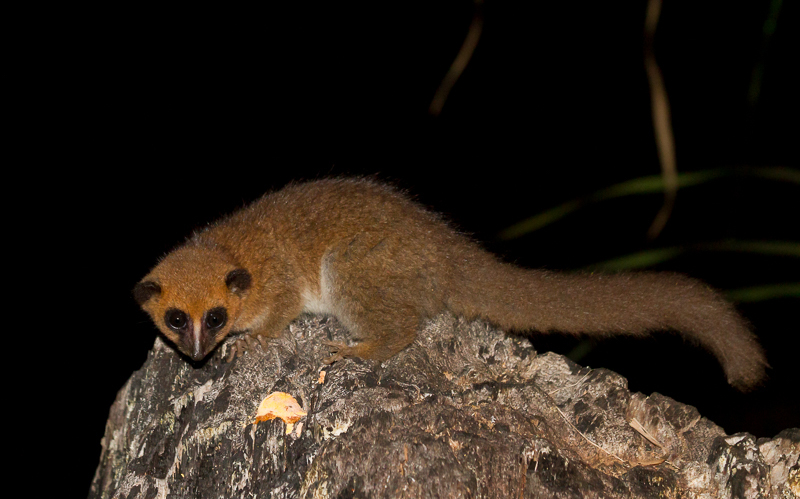
Telling different species of dwarf lemurs apart can be difficult. They are similar in size and shape, and their colors are often soft and not very bright. Groves’ dwarf lemurs are no exception. Their fur is a rusty brown color on their back, limbs, and head. On their belly, this rusty brown fur mixes with gray. Like many other dwarf lemurs, they have dark rings around their eyes. However, one feature that may help identify this species is a white patch of fur running up the bridge of their nose, stopping between the eyes.
Diet
Madagascar’s tropical climate has just two main seasons: a wet season and a dry season. During the wet season, fruit and flowers are plentiful, offering a rich and varied supply of food. In the dry season, however, food becomes hard to find, making survival much more difficult.
Many animals respond to this seasonal change by searching for different types of food. Dwarf lemurs, however, have evolved a very different strategy: they sleep through it. Some species—especially those living in rainforests—go into true hibernation, while others enter shorter periods of deep rest called torpor. This amazing ability makes dwarf lemurs the only primates that hibernate regularly and the only tropical mammals known to hibernate at all.
When the wet season returns, dwarf lemurs wake up and take full advantage of the forest’s abundance. They feed on nectar, fruit, and insects, storing fat—mostly in their tails—to help them survive the long dry season.
So far, there is no reason to believe that Groves’ dwarf lemurs eat anything very different from other dwarf lemurs. They likely rely on the same basic foods. However, with more research, we may one day discover surprising differences in their diet.
Behavior and Lifestyle
Groves’ dwarf lemurs are arboreal primates. Though small and seemingly unassuming, they are well adapted to life in the trees. Their tiny but nimble fingers grip branches with ease, while their long tails provide balance as they move through the canopy. Thanks to their light weight, they can navigate both the sturdy limbs of the upper canopy and the thinner branches of the understory, giving them access to a wide range of foraging and nesting sites.
Because of their small size, dwarf lemurs are vulnerable to predators such as the fossa and the native ring-tailed mongoose. To stay safe, they have evolved a survival strategy called crypsis, which focuses on remaining hidden. Unlike many primates that travel in social groups to reduce individual risk, dwarf lemurs tend to forage and travel alone. This solitary lifestyle helps reduce noise and visibility, making them less likely to attract attention.
Their nocturnal habits offer an additional layer of protection. Being active at night reduces their chances of encountering predators, many of which are less active after dark. During the day, they sleep in nests hidden inside tree hollows, which they line with soft leaves. In areas where hollow trees are scarce, they may use leaf-litter nests on the forest floor, though this is likely a compromise driven by habitat limitations rather than preference.
For several months, during Madagascar’s dry season, dwarf lemurs enter a state of dormancy. For a long time, researchers assumed all dwarf lemurs enter their dormant states in the protection of tree hollows, based on observations of fat-tailed dwarf lemurs. However, more recent studies have shown that dormancy behavior varies by species and habitat. While fat-tailed dwarf lemurs enter a torpor state inside tree hollows in the dry deciduous forests of western Madagascar, rainforest-dwelling dwarf lemurs excavate underground burrows where they undergo true hibernation.
This difference likely reflects environmental conditions. In western forests, daily temperature swings allow lemurs to warm passively and occasionally stir from dormancy. Although not highly insulated, tree hollows suffice in this context. In contrast, the high-altitude rainforests of eastern Madagascar are consistently cool and can even experience freezing temperatures. In these colder, wetter conditions, tree hollows offer little protection. Burrows provide better insulation and a more stable microclimate. The humus-rich soils of these forests hold together well, making burrow construction possible—a contrast to the drier, sandier soils of the west, which are less suited to burrowing.
Genetic evidence suggests that dwarf lemurs originally evolved in eastern Madagascar’s montane rainforest habitats. If so, burrowing may represent the ancestral hibernation strategy, while the use of tree hollows likely evolved later in response to the challenges of drier environments.
As Groves’ dwarf lemurs live in rainforest habitats, it is likely that they are a species that enters true hibernation. However, with no research to date on their behaviors, it is also possible that we will discover something totally unique to them.
Like many cryptic primates that have been understudied, dwarf lemurs were long believed to be solitary—interacting only by chance or for reproduction. But recent research has challenged that assumption. Living a hidden life doesn’t necessarily mean living alone, and, in fact, cryptic nocturnal primates live quite rich social lives.
Dwarf lemurs typically form small family units consisting of two parents and their offspring. These units may be loosely associated rather than tightly bonded, but they maintain a degree of social cohesion. Foraging may be done independently, but family members often use the same areas and may even share tree hollows for sleep—particularly when offspring are young.
Interestingly, both parents maintain separate, overlapping territories, a behavior not often seen in more gregarious primates. Adult offspring sometimes stick around, foraging with their parents or younger siblings, and may even help care for the young—a sort of informal babysitting. Still, dwarf lemurs are not always physically together, and much of their activity, including foraging, is done alone.
During the dry season, when food is scarce and the lemurs enter dormancy, family bonds are put on pause. Each individual finds a separate place to hibernate, even if they share the same territory the rest of the year.
Adding another layer of complexity, dwarf lemurs often share their habitats with other lemur species—including other dwarf lemurs. The presence of multiple closely related species in the same environment raises fascinating evolutionary questions. How did these different lineages arise and persist side-by-side, despite competing for similar resources? The answers are still unfolding, but they suggest a subtle dance of ecological and behavioral differences that allows for peaceful coexistence.
For Groves’ dwarf lemurs, however, we currently know very little about their social lives or group behavior.
As social animals, primates need to convey important information about their environment, their emotions, and their social relationships. This communication comes in many forms—vocalizations, body language, facial expressions, hand gestures, and even scent. The specific methods used often depend on a species’ survival strategies.
Dwarf lemurs are known for producing a variety of vocalizations, including defensive snorts and whistling calls. While these sounds are well-documented, their full range of vocalizations and the meanings behind them remain underexplored. It’s likely that, like other primates, dwarf lemurs have a more complex vocal repertoire than we’ve yet discovered.
In addition to sound, dwarf lemurs also rely heavily on their sense of smell for communication. To facilitate this, like all lemurs, they have moist noses that pick up smells more effectively than those of simian primates (monkeys and apes) that have dry noses. Olfactory signals play a key role in marking territory, maintaining contact with family members, and signaling their presence to others. Rather than using specialized scent glands like some other primates, dwarf lemurs keep things simple. They manually wipe their feces to mark trees and branches, leaving behind a scent trail to communicate with others of their kind.
The specifics of Groves’ dwarf lemur communication are not currently understood.
Dwarf lemur family groups usually form around a monogamous pair—a male and a female—who are believed to form long-lasting bonds. Both parents take active roles in caring for their young, including feeding, grooming, and accompanying them on foraging trips. In some species, older siblings have also been seen helping care for the younger ones.
Dwarf lemurs differ from many other primates in their reproductive strategy. Instead of having just one baby at a time, like many primates do, they tend to have more. Females usually give birth to two babies. In one species, the fat-tailed dwarf lemur, mothers can sometimes have three or four!
Because they have a short time before entering dormancy, the babies must grow quickly. Mating happens early in the season, and the mother carries her babies for only a few months. Weaning also happens fast, often within weeks after birth, as the young start exploring the trees on their own. By about two months old, they are usually fully weaned and feeding themselves. When the dry season comes, the young enter dormancy on their own. Even though they become independent early, many dwarf lemur species don’t reach full sexual maturity until their second year.
While this is likely how Groves’ dwarf lemurs live, we currently don’t have studies on their reproduction or family life.

Lemurs are often considered keystone species in Madagascar, where their diverse ecosystems are shaped by a range of physical and climatic factors. This has led to a high rate of microendemism, meaning that many ecosystems are highly localized and depend on specific species to maintain their stability. The impressive diversity of dwarf lemurs indicates that each species plays a distinct yet crucial role in sustaining the ecosystems it inhabits.
As frugivores, dwarf lemurs likely contribute to seed dispersal. The seeds from the fruits they consume pass through their digestive tracts and are deposited in their feces, often far from the parent tree. This process helps regenerate forests by promoting plant diversity and growth. Additionally, though not yet thoroughly studied, small nectar-eating primates like dwarf lemurs may play a role in pollination, further supporting the plant species on which they rely for food.
While the ecological role of Grove’s dwarf lemurs remains poorly understood, they are undoubtedly an integral part of their ecosystem. By dispersing seeds and potentially pollinating flowers, they likely contribute to the sustainability of the very plant species they depend on. Their diet of insects and other invertebrates may also play a role in population control, helping to maintain ecosystem balance. However, much remains to be studied to fully understand their ecological impact.


The Groves’ dwarf lemur is classified as Data Deficient by the International Union for Conservation of Nature (IUCN, 2018) and appears on the IUCN Red List of Threatened Species. A lack of data, however, does not discount the trends we see across the board in other dwarf lemur species, whose populations are declining.
Dwarf lemurs, like Madagascar’s countless other endemic species, face severe threats from habitat loss and degradation. Between 1973 and 2014, the island lost 37% of its already dwindling forest cover. Much of what were once biologically rich forest ecosystems, home to rare and highly specialized species, has been cleared and replaced with crop monocultures, often rice. For arboreal species like dwarf lemurs, the loss of their forest habitat is devastating. These animals not only rely on the canopy and understory to move around but also depend on mature trees with hollows for nesting and well-established lianas and vine tangles for protection.
Though not well-studied in the tropics, the natural processes by which tree hollows are created are complex and time-consuming, dependent on the activities of countless other species. In temperate forests, bird and mammal species, such as woodpeckers, may contribute by enlarging existing cavities. Fascinatingly, Madagascar has no woodpecker species, leaving other animals to fill this ecological niche. Among them is the aye-aye (Daubentonia madagascariensis), a highly specialized lemur that uses its ever-growing incisors to gnaw into trees in search of grubs. The extent to which this species contributes to tree hollow formation in Madagascar’s rainforests remains unknown. Because this process unfolds over decades, the loss of mature trees severely limits the availability of suitable nesting sites. As deforestation continues to fragment Madagascar’s forests, finding these essential shelters—critical for dwarf lemurs and many other species—becomes increasingly difficult.
For decades, slash-and-burn agriculture has been the dominant land-use practice in Madagascar. This unsustainable method involves cutting and burning forests to clear land for farming. While the initial burn releases nutrients into the soil, the benefits are short-lived. Within just a few years, the land becomes infertile and prone to erosion. As a result, species-rich ecosystems are being transformed into farmland that remains productive for only a fraction of the time it took them to develop. Once lost, these ecosystems can never fully recover, and the wildlife they supported—including dwarf lemurs—faces an uncertain future.
Habitat fragmentation—where patches of habitat remain but are disconnected from one another—presents its own set of challenges, especially for tree-dwelling primates like dwarf lemurs. When a once-expansive forest becomes fragmented, dwarf lemur populations are isolated, limiting their access to food and other critical resources. This not only reduces their chances of thriving but also forces them into increased competition with one another, which can become physical and potentially deadly.
Additionally, fragmentation restricts their pool of potential mates, leading to genetic bottlenecks. As genetic diversity declines, populations become less viable, with individuals less likely to survive to reproductive maturity. Because dwarf lemurs reproduce and develop relatively quickly for primates, genetic bottlenecks may have the chance to develop more rapidly, heightening the urgency of addressing this threat.
On top of habitat loss and fragmentation, many dwarf lemur species also face direct threats from hunting and the illegal pet trade. Poaching primates often involves the killing of the mother and, in many cases, other members of the family group. As a result, several individuals may be lost so that a single animal can be captured and sold. Furthermore, primates—especially nocturnal species like dwarf lemurs—do not make suitable pets. Most buyers lack the knowledge and resources to properly care for them, leading to extreme stress, malnutrition, self-harm, and premature death. For those lucky enough to be forfeited or rescued, rehabilitating and returning primates to the wild is not only time-consuming but also complex, with no guarantee of success.
Endemic to Madagascar, Grove’s dwarf lemurs already occupy a small and severely fragmented range. Each species of dwarf lemur fills a distinct ecological niche, yet little research has been conducted on the nuances of their roles and interactions within their ecosystems. This lack of research and data poses a threat in itself, as it limits our ability to fully assess the pressures they face—something that has often led to species being underestimated in terms of conservation urgency—and hinders meaningful action to protect them.
The Grove’s dwarf lemur’s unique lineage is not only key to understanding dwarf lemurs but also to broader evolutionary processes and ecological interactions—including our own connection to nature as humans. Conserving this species and the habitats it depends on is paramount.
Though not listed by name, the Groves’ dwarf lemur is included under the Cheirogaleus group in Appendix I of the Convention on International Trade in Endangered Species (CITES), an international agreement that aims to ensure trade in wild animals and plants does not threaten their survival.
In 2021, during the COP26 United Nations climate summit in Glasgow, the government of Madagascar pledged to “halt and reverse” deforestation by 2030. While critical for lemur conservation, this goal is challenging. Many Malagasy people face poverty, leaving them few economic alternatives to practices like slash-and-burn agriculture, which devastates the island’s ecosystems. Without viable solutions, conservation efforts will continue to face resistance.
Complicating matters further is the risk of biodiversity leakage—a phenomenon in which strict environmental regulations in wealthier nations push industries to shift operations to regions with weaker protections. As these nations work to restore their own biodiversity, demand for timber, agricultural land, and rare minerals often fuels habitat destruction elsewhere—especially in countries where conservation faces financial and political obstacles. Without safeguards, this displacement can undermine global conservation progress.
Critically, the regions most vulnerable to biodiversity leakage are often the most ecologically valuable. Studies show that protecting biodiversity hotspots—areas with exceptionally high species richness and endemism, like Madagascar—yields disproportionately large conservation benefits. These regions not only support unique and irreplaceable species but also provide essential ecosystem services, from carbon storage to water regulation, benefiting both local communities and the global climate.
Ensuring that local communities have viable economic alternatives to deforestation and unsustainable land use is therefore essential. Sustainable, well-funded conservation programs must go hand in hand with policies that prevent biodiversity-rich regions from becoming regulatory havens. Investing in these hotspots is not just an ethical responsibility—it is one of the most effective strategies for preserving global biodiversity.
Currently, there are no conservation initiatives specifically targeting fat-tailed dwarf lemurs or dwarf lemurs in general. However, research—particularly field studies—has increased significantly in recent years. The fascinating behaviors of dwarf lemurs have likely contributed to growing scientific interest and may also help make them more charismatic to the public than they initially appear.
Fortunately, because many lemur species play crucial ecological roles and often share habitats, targeted species-specific initiatives are not always necessary for their conservation. Protecting and restoring forests already goes a long way, and many organizations are working toward this goal. The Lemur Conservation Network, for instance, unites over 60 conservation groups that lead research and community-based projects across Madagascar.
Due to its recent description, the Groves’ dwarf lemur is not yet on these organizations’ radar. But there is some hope that, because it is found in two well-protected national parks connected by a robust ecological corridor, this species may be faring better than some other dwarf lemurs. While hopeful, this remains to be confirmed.
One thing is certain: without sustained investment in conservation efforts—such as reforestation, ecological corridors, and community-driven land stewardship—this species, along with many others, risks being pushed toward extinction. Protecting biodiversity hotspots is not just about saving individual species; it is about maintaining the delicate ecological networks that sustain them and enabling local communities to protect them.
- https://www.iucnredlist.org/species/163021927/163021999
- https://www.alltheworldsprimates.org
- https://static1.1.sqspcdn.com/static/f/1200343/27802200/1516134483343/PC31_McLain_et_al_New_Cheirogaleus_sp.pdf
- https://news.mongabay.com/2018/01/theres-a-new-member-of-the-lemur-family/
- https://www.uni-hamburg.de/en/newsroom/presse/2014/pm70.html
- https://www.sciencefriday.com/segments/dwarf-lemur-hibernate-telomeres/
- https://royalsocietypublishing.org/doi/10.1098/rsbl.2024.0531
- https://www.sciencedaily.com/releases/2010/04/100413162914.htm
- https://www.sciencedirect.com/science/article/abs/pii/S1055790310001028?via%3Dihub
- https://onlinelibrary.wiley.com/doi/pdfdirect/10.1002/ajp.23473
- https://radar.brookes.ac.uk/radar/file/6623d54f-4d3e-b168-9058-f8d681e373fa/1/biebouw2009revealing.pdf
- https://pubmed.ncbi.nlm.nih.gov/19546574/
- https://horizon.documentation.ird.fr/exl-doc/pleins_textes/pleins_textes_6/colloques2/010008469.pdf
- https://pubmed.ncbi.nlm.nih.gov/2007505/
- https://www.sciencedirect.com/science/article/abs/pii/S0006320718310097
- https://www.researchgate.net/publication/281374004_The_value_of_the_spineless_monkey_orange_tree_Strychnos_madagascariensis_for_conservation_of_northern_sportive_lemurs_Lepilemur_milanoii_and_L_ankaranensis
- https://cites.org/sites/default/files/documents/E-CoP19-Inf-74.pdf
- https://www.lemurconservationnetwork.org/
- https://www.sadabe.org/
- https://www.rainforesttrust.org/urgent-projects/safeguarding-lemurs-in-madagascar/
- https://www.science.org/doi/10.1126/science.adv8264
- https://www.youtube.com/watch?v=NtSaSR7PAps
- https://protectedareas.mg/document/show/255836
- https://www.researchgate.net/publication/225628290_Live_fast_die_young_Flexibility_of_life_history_traits_in_the_fat-tailed_dwarf_lemur_Cheirogaleus_medius
- https://link.springer.com/article/10.1007/s10764-023-00363-w
- https://www.sciencedirect.com/science/article/abs/pii/S0167880906002866#:~:text=Slash%20and%20burn%20agriculture%20or,land%20is%20left%20to%20fallow.
- https://www.csmonitor.com/World/Africa/2025/0127/madagascar-biodiversity-forest-deforestation
- https://www.nature.com/articles/s41598-021-84727-3#:~:text=In%20the%20wild%2C%20the%20dwarf,the%20hibernation%20season%20in%20Madagascar.
- https://news.mongabay.com/2013/05/hibernating-primates-scientists-discover-three-lemur-species-sleep-like-bears/
- https://www.lemurconservationnetwork.org/organization/wildlife-madagascar/
Written by Zachary Lussier, Jul 2025