WILDLIFE MYTHS IN A DIGITAL WORLD

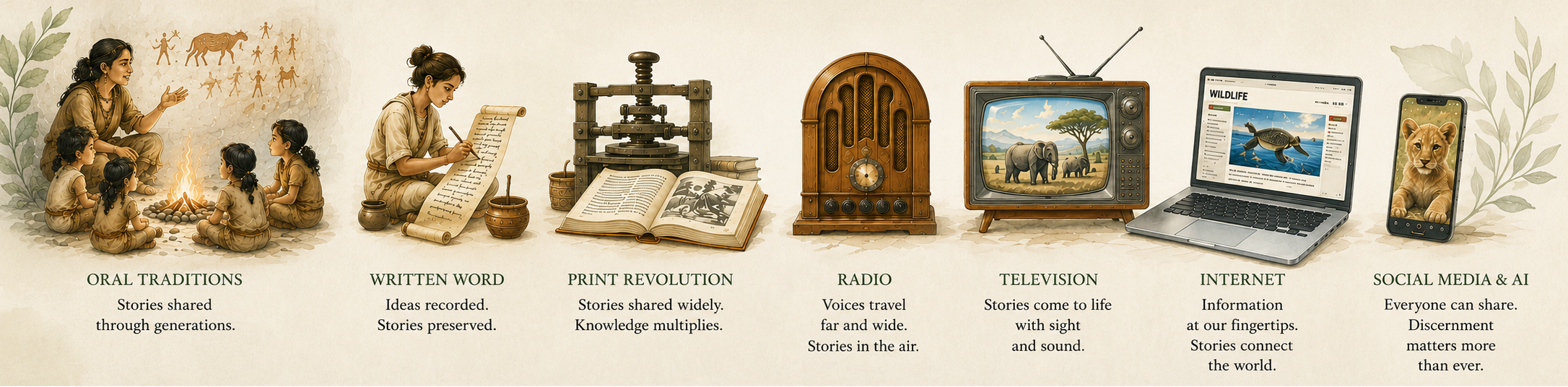
Humans are storytellers. In every age, whether shared through oral traditions, theater, or the written word, people have created stories that reflect their understanding of the natural world. Through folklore, fairy tales, allegories, mythology, fantasy, and fact, people have woven stories into the fabric of their cultures, helping us explain nature, preserve traditions, communicate social values, and inspire wonder.

Over the past century, communication technologies—including radio, movies, television, computers, and now social media—have dramatically expanded the reach of storytelling. Stories can travel farther and faster than ever before, shaping not only local traditions but global ones. Modern media is simply their newest vehicle.

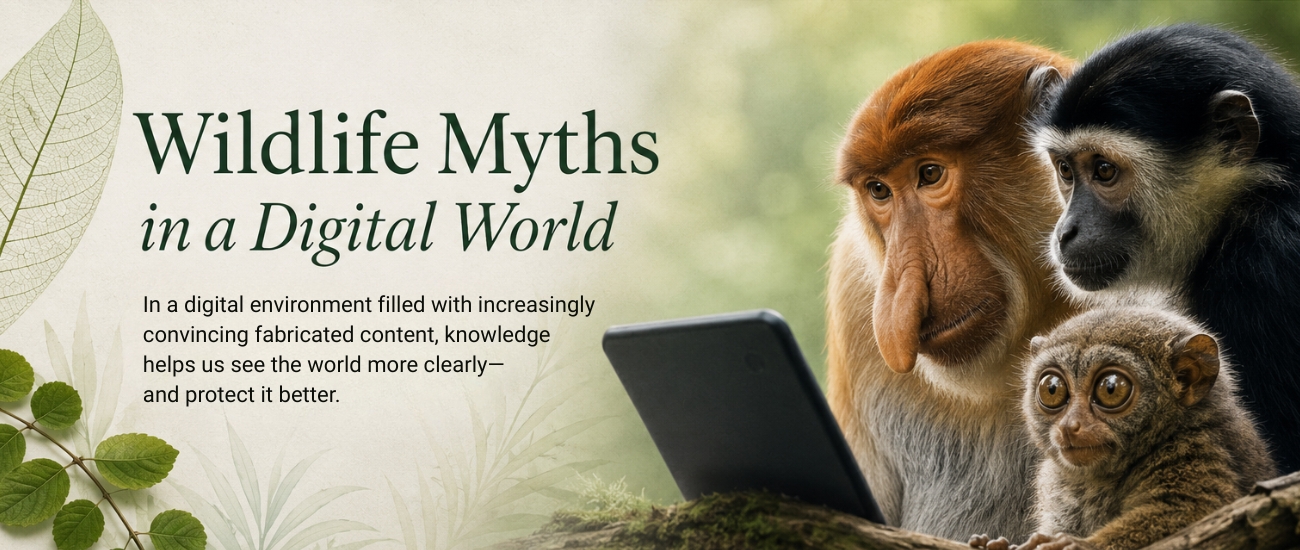
Our instinct to tell stories remains as strong as ever. What has changed is the storyteller’s toolkit. One area where this evolution in storytelling is especially evident is wildlife imagery and video. Artificial intelligence and other creative technologies now make it possible to produce remarkably realistic wildlife images and videos that can be shared worldwide within minutes. Many are clearly presented as fiction, artistic interpretation, or entertainment. Others, however, blur the line between imagination and observation, creating modern myths about wildlife that may shape how people understand—and interact with—the natural world.

Is what we’re watching fact, fantasy, folklore, or simply fun?

Humans Have Always Told Stories...The Vehicles Have Changed

Unlike many traditional forms of storytelling, these new creations often provide few cues that tell us whether we’re watching real-life observations, artistic interpretation, or fiction. Those that are fabricated appear in our newsfeeds looking remarkably real, leaving viewers to decide for themselves what to believe. Increasingly, listeners and viewers must determine for themselves whether what they’re seeing reflects reality or imagination. That shift can easily lead to misunderstanding.

Our concern is not with storytelling itself. Many AI-generated wildlife stories offer extraordinary opportunities for education, creativity, conservation, and artistic expression. Our concern is with realistic-looking wildlife videos that portray behaviors unlikely to occur in nature without making that distinction clear. The animals may appear completely authentic. It is often their behavior that reveals something is amiss.

Would a predator really behave this way? Would wildlife respond to humans in this manner? Are the people behaving realistically, or taking risks that trained conservationists never would? The distinctions can be subtle, yet these portrayals can create new myths about wildlife behavior that leave viewers with false impressions of how wild animals actually live.

Today’s science allows us to understand much of what earlier generations could not even imagine. Understanding wildlife behavior helps us appreciate imaginative storytelling while recognizing when it departs from the biology of the animals it portrays. Conservation education is an invitation to discover that the real natural world is more imaginative, more surprising, and more extraordinary than anything we could invent.

Mythology Throughtout the Ages

Mythology is a collection of stories, beliefs, and legends that help people explain the world around them. Across cultures and throughout history, myths have explored the origins of life, natural phenomena, human behavior, morality, and the unknown. Some were rooted in observation. Others in imagination, symbolism, or spiritual belief. Whether passed from one generation to the next around a campfire or shared through books, theater, film, and digital media, myths have always reflected humanity’s desire to understand and interpret the world. Storytellers signaled whether a story was history, allegory, or folklore, helping listeners understand how it should be interpreted.

Storytelling in the Digital Age

Today, listeners or viewers have new responsibilities to determine whether videos in our news feeds are fact or fiction. Easily accessible digital tools allow anyone to create remarkably realistic wildlife stories and distribute them in minutes. Some of these stories are clearly imaginative and entertaining. Others blur the line between fiction and reality. To gain more views, the creator may not let us in on his or her creativity, leaving false impressions about how wild animals behave. This may seem innocent enough, but could ultimately lead viewers into harm’s way. Understanding wildlife behavior helps us recognize what is fiction, appreciate what is real, and better understand why conservation matters.

Unraveling a Wildlife Myth:
Do Wild Animals Experience the World the Way We Do?

One of the most common misconceptions about wildlife is the belief that other animals understand the world as humans do. We naturally interpret what we see through our own experiences, recognizing emotions such as kindness, gratitude, fairness, friendship, or compassion because those are the social cues we know best. But wild animals experience the world through very different biological, sensory, and behavioral adaptations.

Every species has been shaped by millions of years of evolution to survive within its own environment. They communicate through different signals, respond to different pressures, and experience the world through senses and priorities that are not ours. Their behaviors are adaptations that have enabled them to survive and reproduce within their ecological communities.

This is why wildlife behavior can be misunderstood. When fictional or digitally created scenes are presented as though they reflect typical animal behavior, they can quietly reshape our expectations. We may begin to believe that wild animals understand our intentions, welcome close human contact, or respond according to human emotional codes. They do not. They respond according to the evolutionary adaptations that have allowed them to survive.

Conservation education is not about teaching wildlife to understand humans. It is about helping humans better understand wildlife. The more we learn about how animals actually live, communicate, and respond to their environments, the less likely we are to mistake fiction for reality.

We achieve coexistence not by expecting wildlife to become more like us, but by appreciating wildlife well enough to respect lives that are organized according to entirely different rules. Wildlife doesn’t exist to meet human expectations. It follows the evolutionary rules that allowed it to thrive long before we arrived—and those differences are exactly what make the natural world so remarkable. This is where conservation education becomes invaluable.

The more we learn about wildlife, the more we understand—and the more we realize that every species experiences the world in ways we can observe, study, and appreciate, but never completely inhabit.

Enjoy the Stories. Understand the Realities.

Enjoy stories, art, films, and the creative possibilities of AI. We applaud the use of AI and CGI in entertainment when they reduce the need to capture, breed, keep, or train wild animals for human entertainment. Technology gives us extraordinary new ways to tell stories about wildlife, helping us explore ideas, spark curiosity, and inspire wonder. Conservation education helps ensure those stories deepen our understanding. So, if something feels off, pause for a moment and ask yourself:

🌿 Would this species actually behave this way?
🌿 Would a predator respond this way?
🌿 Would an injured or frightened animal really be so calm and welcoming?
🌿 What do we know about this animal’s natural behavior?

Let curiosity lead you back to reality.

The real lives of wild animals are every bit as remarkable as fiction—and understanding them is one of the first steps toward appreciating, respecting, and ultimately protecting them.

The more you understand wildlife, the less likely you are to mistake fiction for reality. When you learn about wildlife, you learn about their behavior and their adaptations for their specific ecosystems. Learning about their ecosystems helps you to understand the essential role of biodiversity. Understanding biodiversity teaches why conservation is important for all. 

Understanding wildlife enriches every encounter with nature. Knowledge allows us to appreciate adaptations, understand ecosystems, recognize misinformation, and make better conservation decisions.

Reality is extraordinary. Understanding reality deepens appreciation. Appreciation inspires respect. Respect inspires conservation. Conservation protects the remarkable animals and habitats that inspired us in the first place.

Continuing Exploring

The natural world has been telling its own stories for millions of years. We’d love to introduce you to some of them.