What do monkeys in South Asia have to do with the Trojan War? More than you might imagine!
Ajax, Hector, and Priam are not only characters in Homer’s Iliad but also the namesakes of three gray langur species.
The tradition appears to have begun in 1797, when French naturalist Louis Dufresne named a gray langur after Entellus, a powerful elderly boxer in Virgil’s Aeneid. Apparently, the monkey reminded him of the athletic old man!
Later naturalists expanded the literary cast to include Achilles, Aeneas, and other figures from classical mythology. Although many of those scientific names are no longer in use, four species still carry names inspired by these ancient epic tales.
Who knew that studying monkeys might lead you to the literature of ancient Greece and Rome?
Gray langurs include at least eight species.
Gray langurs belong to the primate subfamily Colobinae.
Asia’s colobines consist of seven genera of 55 species and over 40 subspecies.
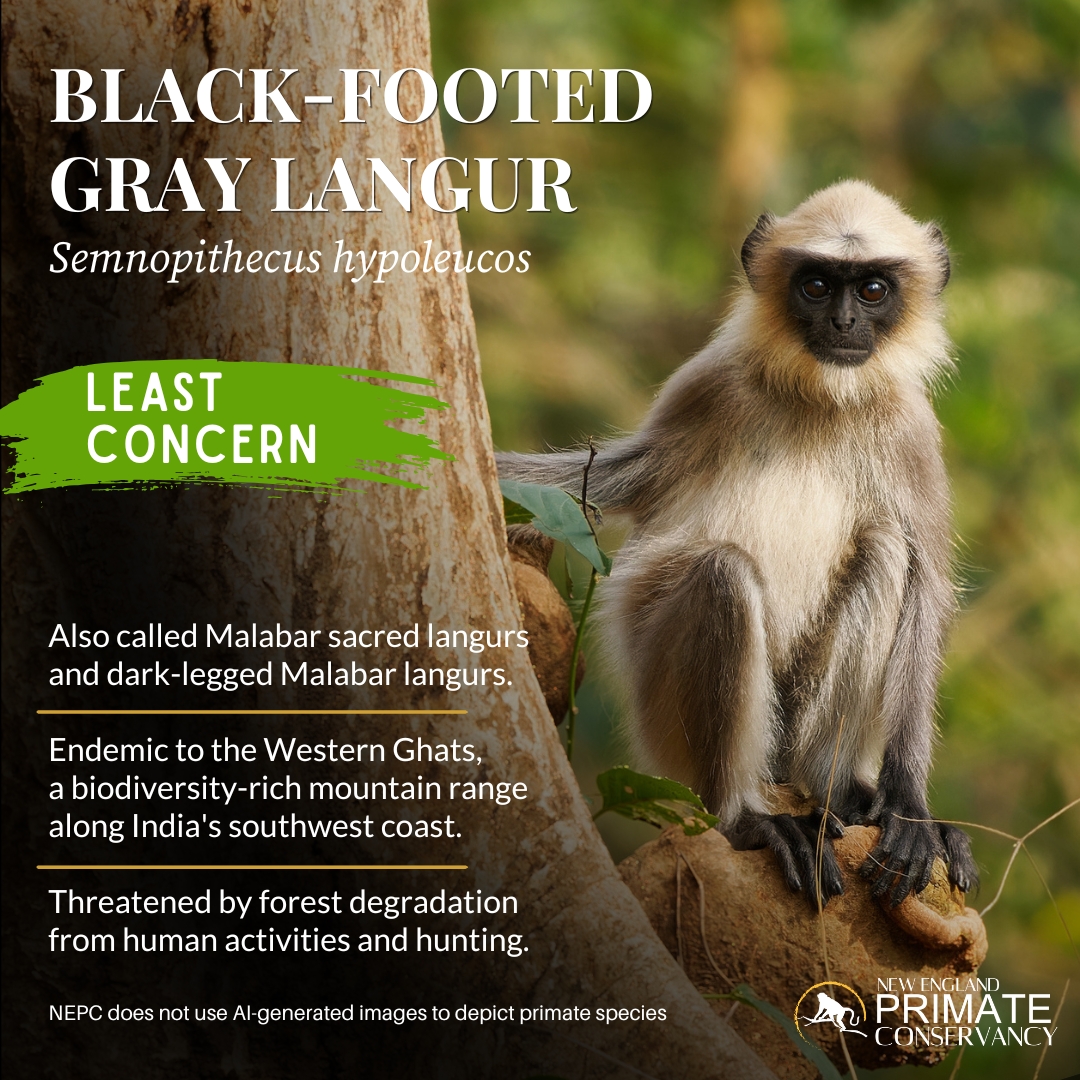
Black-footed gray langurs, also called dark-legged Malabar langurs or Malabar sacred langurs, are monkeys native to India. They are distributed across many territories, including Goa, Karnataka, Kerala, Andhra Pradesh, and Maharashtra. Found in a variety of ecosystems, they live at elevations between 328 to…
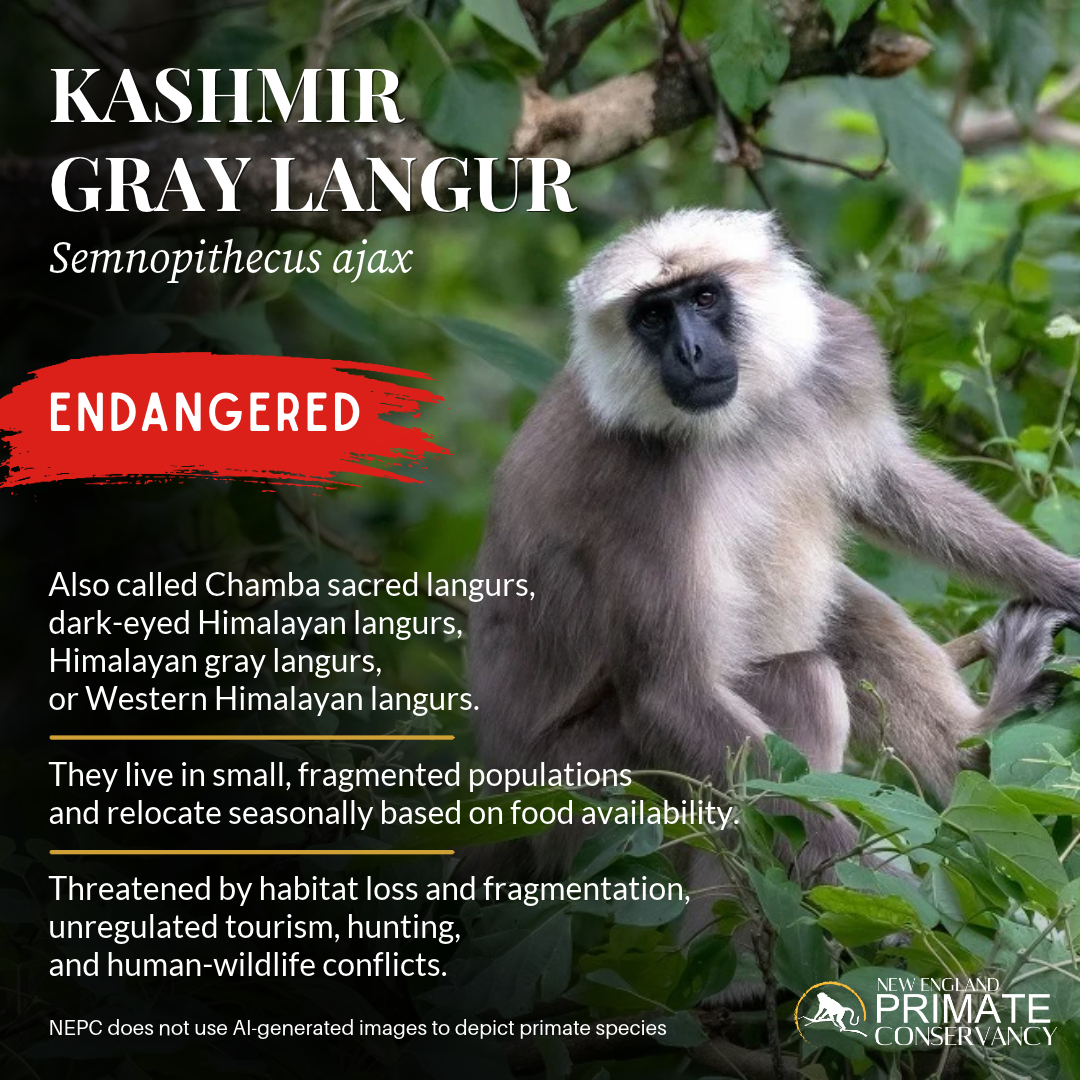
Named for the mighty Greek warrior in Homer's Iliad.
CONSERVATION STATUS: ENDANGERED
The Chamba Valley of Himachal Pradesh, a mountainous state of northwestern India situated in the Western Himalayas, is home to the Kashmir gray langur. Whether or not this leaf-eating monkey inhabits the region of Kashmir (one of the species’s namesakes) is uncertain. However, some wildlife biologists assert that Kashmir…
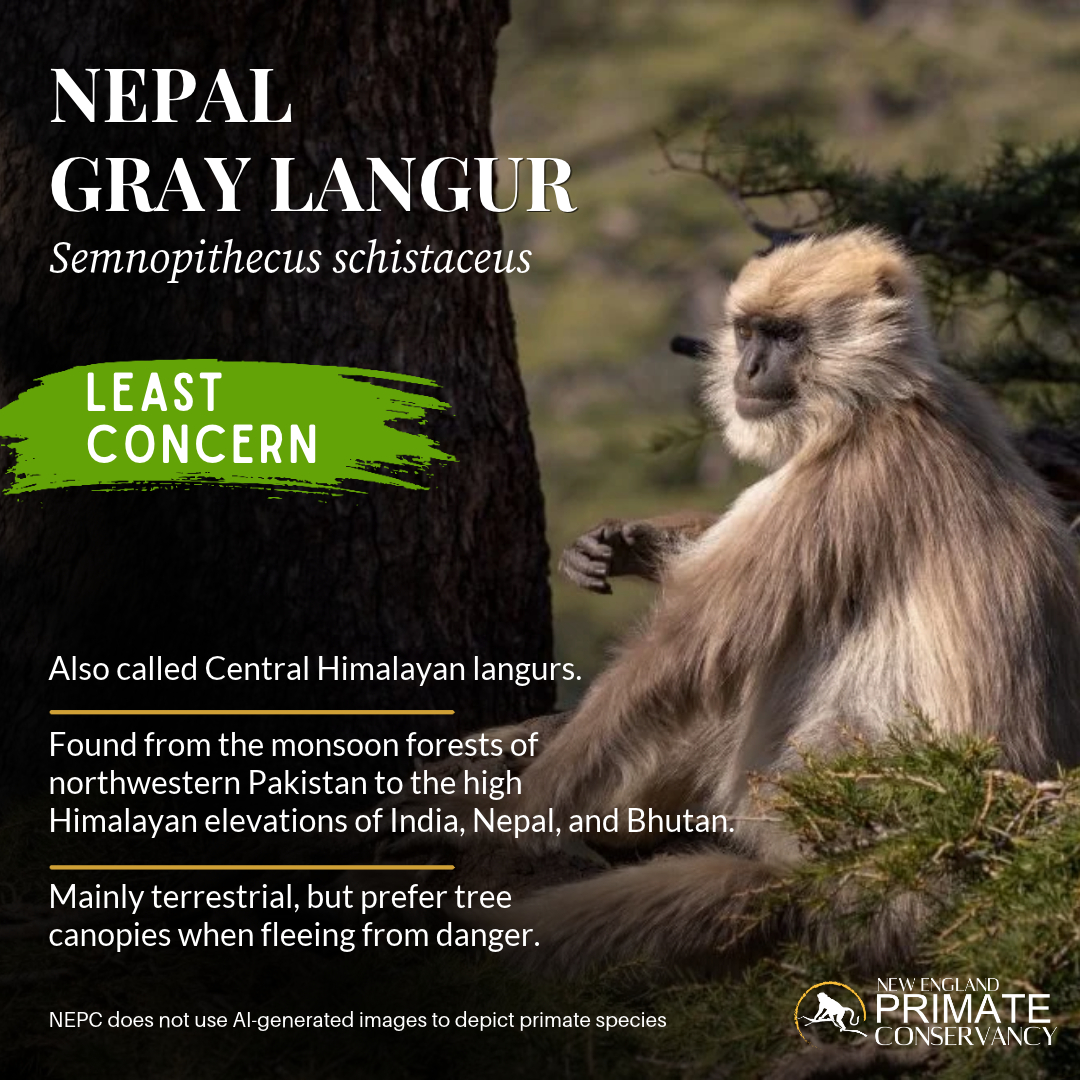
The Nepal gray langur, also known as Himalayan gray langurs or central Himalayan langurs, is a species of langur native to the Himalayan region. Their range is quite extensive and includes Nepal, far southwestern Tibet, northern India, northern Pakistan, and Bhutan, and it may also extend into parts of northeastern…
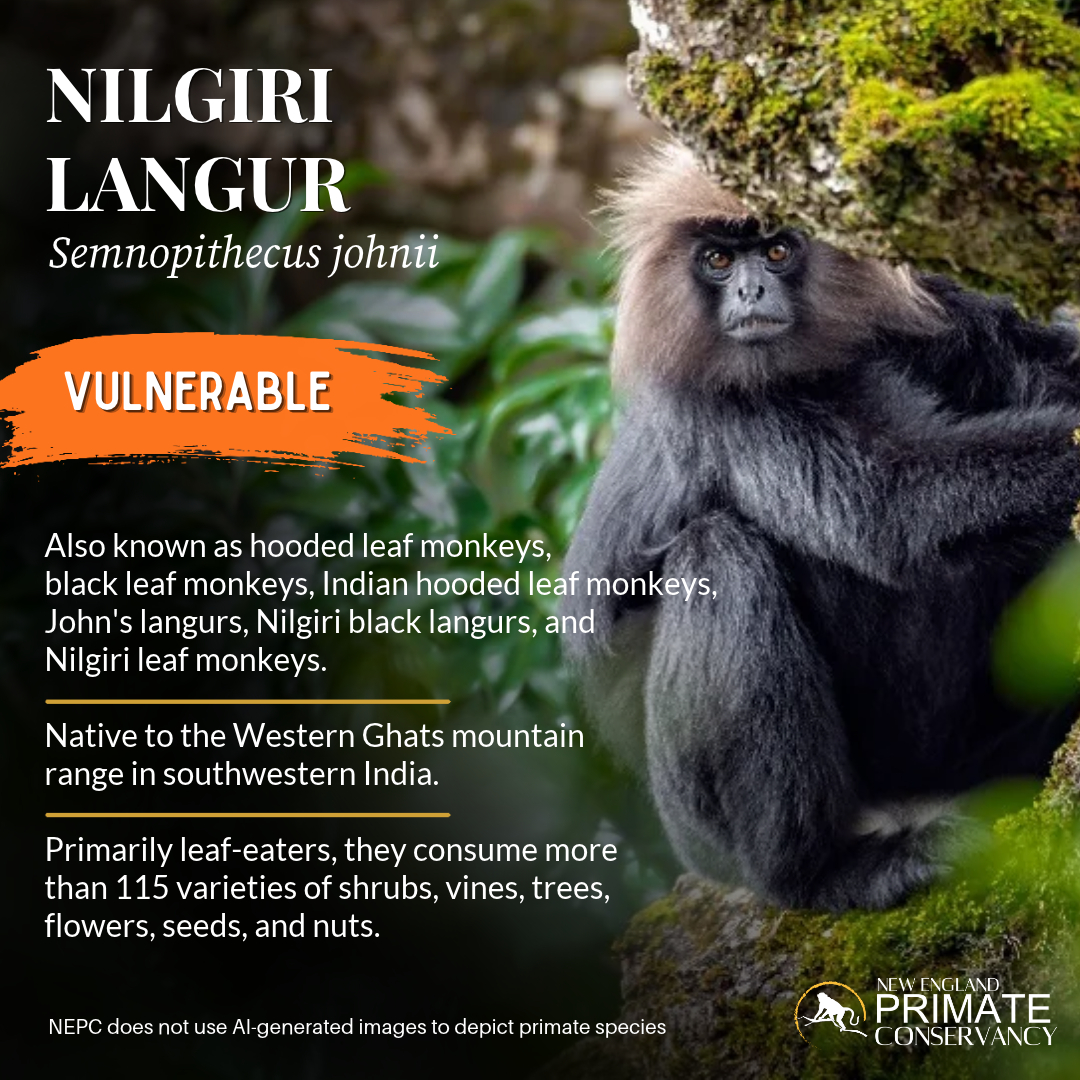
The Nilgiri Langur is a monkey of many names. It is also known as the black leaf monkey, hooded leaf monkey, Indian hooded leaf monkey, John’s langur, Nilgiri black langur, and the Nilgiri leaf monkey. Its common name is after the Nilgiri mountains, which is a part of the Western Ghats mountain range in southwestern…
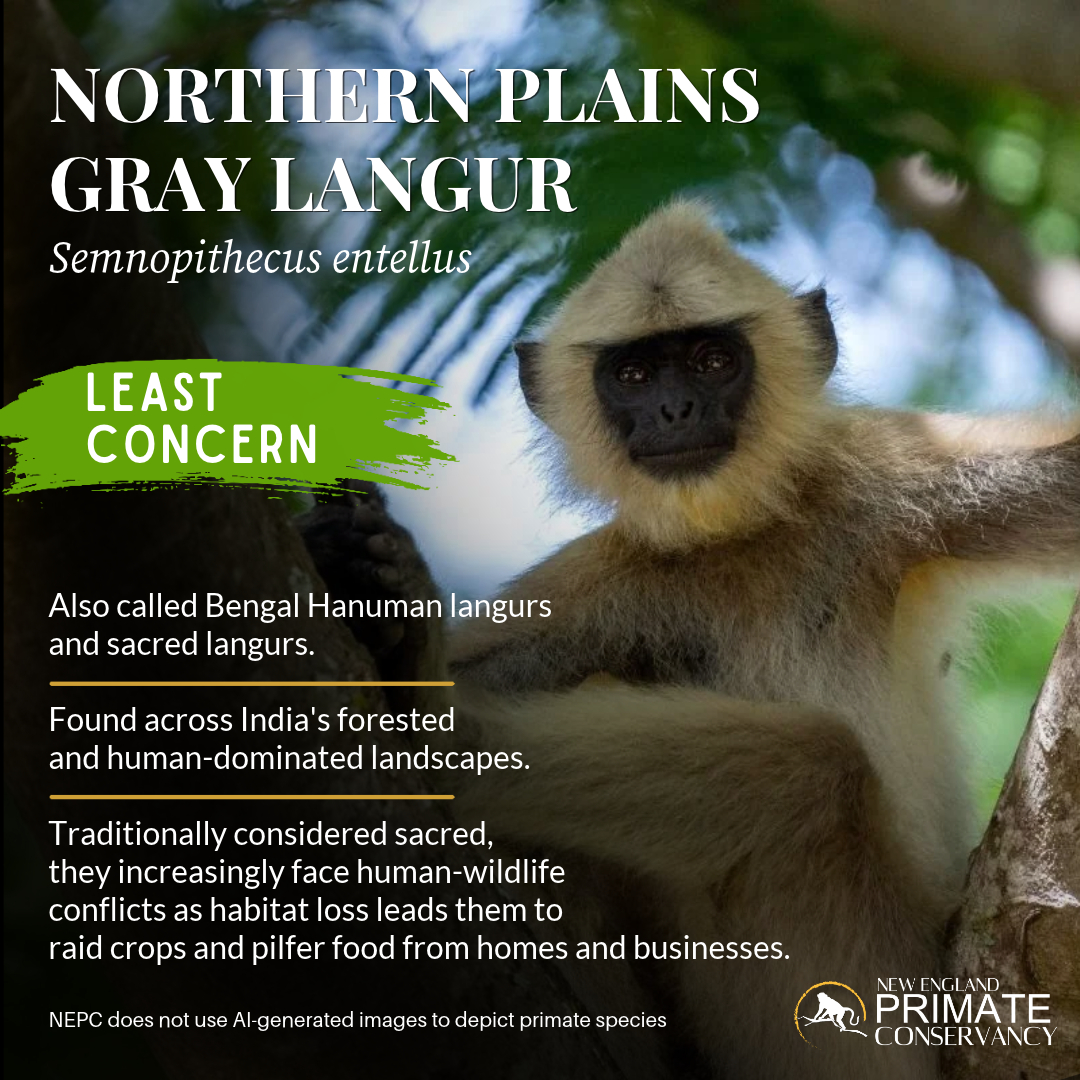
Named for the powerful elderly boxer in Virgil's Aeneid.
CONSERVATION STATUS: LEAST CONCERN
The northern plains gray langur, also known as the Hanuman langur or Bengal gray langur can be found in a wide distribution across Eastern India. Their habitats are located North of the river Godavari and in areas south of the river Ganga. They also appear in Western Bangladesh due to human relocation. With an upper elevation…
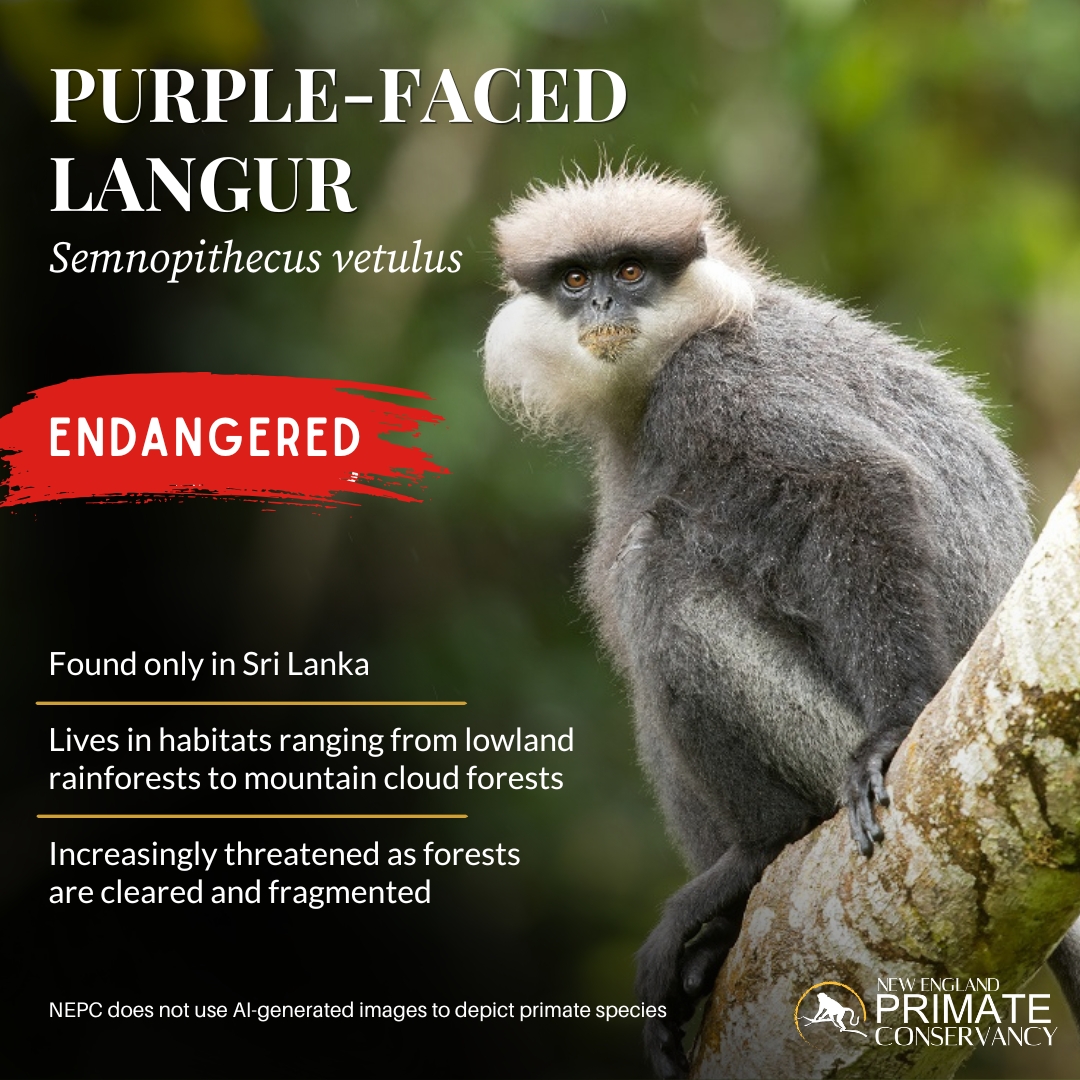
The purple-faced langur, also referred to as the purple-faced leaf monkey or “the black monkey of Sri Lanka” in the Sinhala language, is an arboreal, folivorous monkey endemic to Sri Lanka. There are four distinct subspecies of purple-faced langur, with each residing in, and adapted to, varying geographic regions of the…
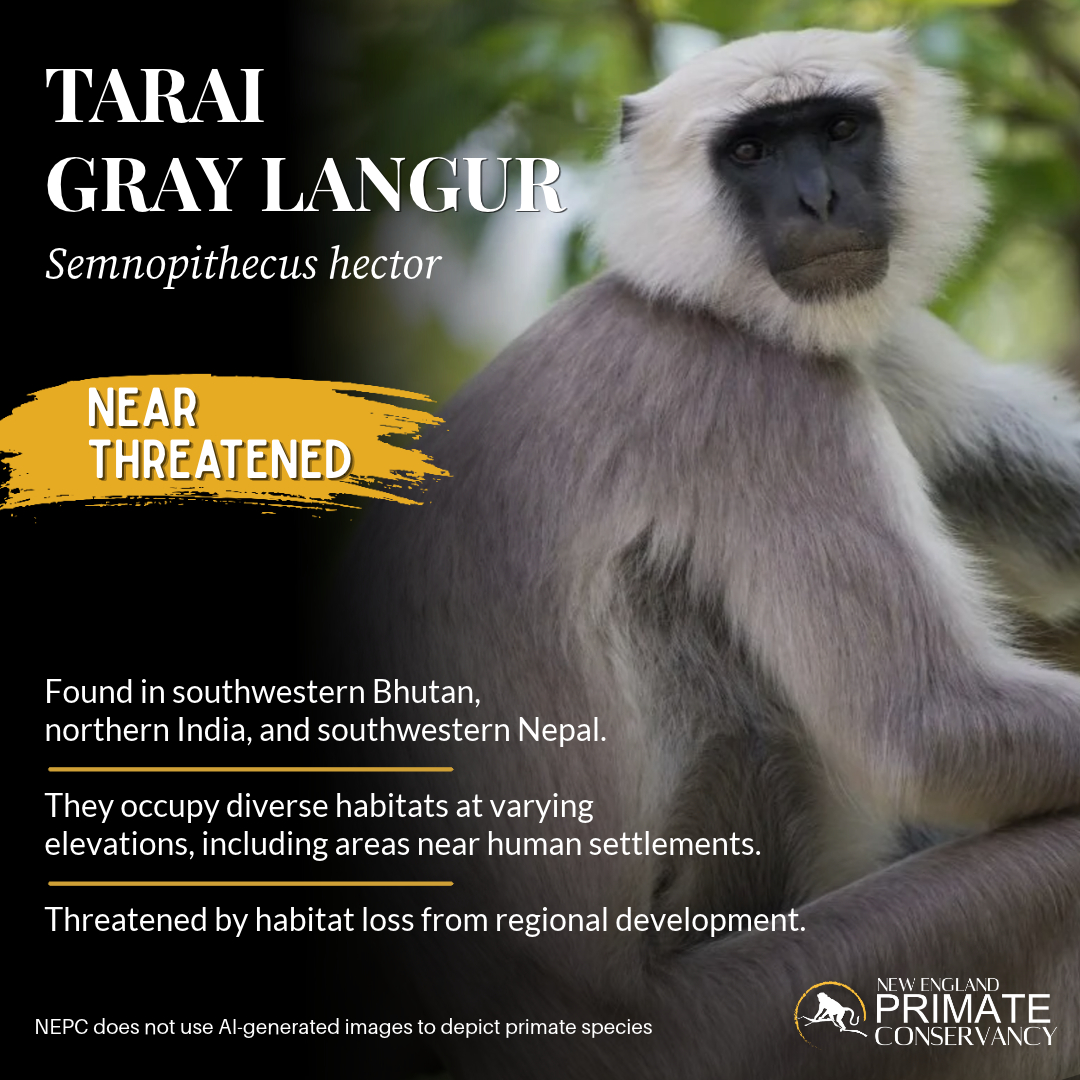
Named for the Trojan prince in Homer's epic classic, The Iliad.
CONSERVATION STATUS: NEAR THREATENED
The Tarai gray langur, also known as the Hanuman langur, lesser hill langur, and the Tarai sacred langur, is native to a small region in Bhutan, northern India, and Nepal, in the foothills of the Himalayan mountains and in the Siwalik Hills. They make their homes amongst the moist deciduous forests of the foothills and up into the oak…
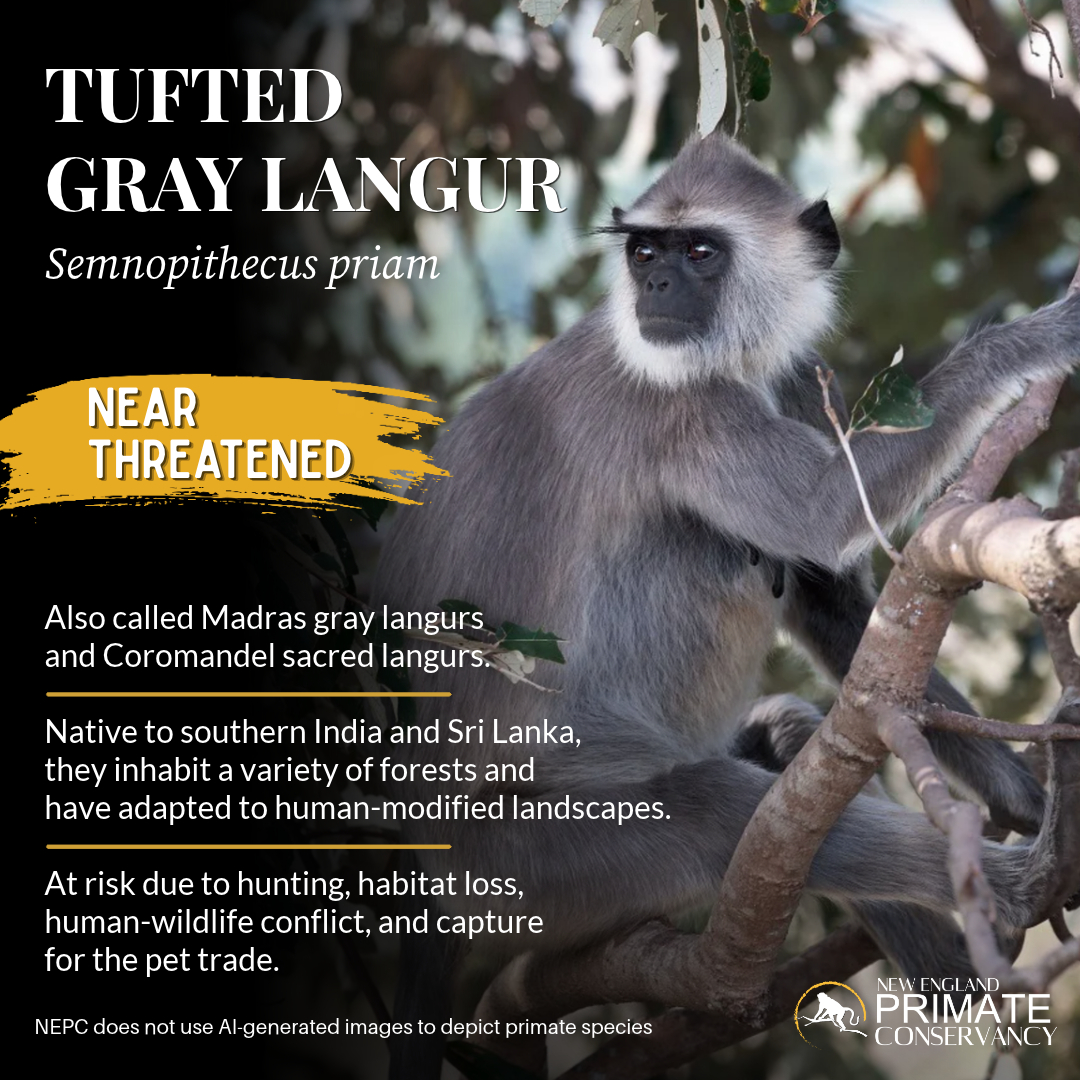
Tufted gray langurs are endemic to the forests of southern India and Sri Lanka. The Western Ghats are a unique region of mountainous forests on the west coast of south India. This ecoregion has a range of forest types from dry deciduous to tropical. Most of the Indian gray tufted langurs live in these forests and form large…