Lutungs and Langurs, Trachypithecus
LUTUNGS AND LANGURS
The Asian colobines consist of seven genera with 55 species and over 40 subspecies.
The lutungs and langurs in the genus Trachypithecus include at least 20 species.
Also explore Surilis and Langurs, Presbytis.
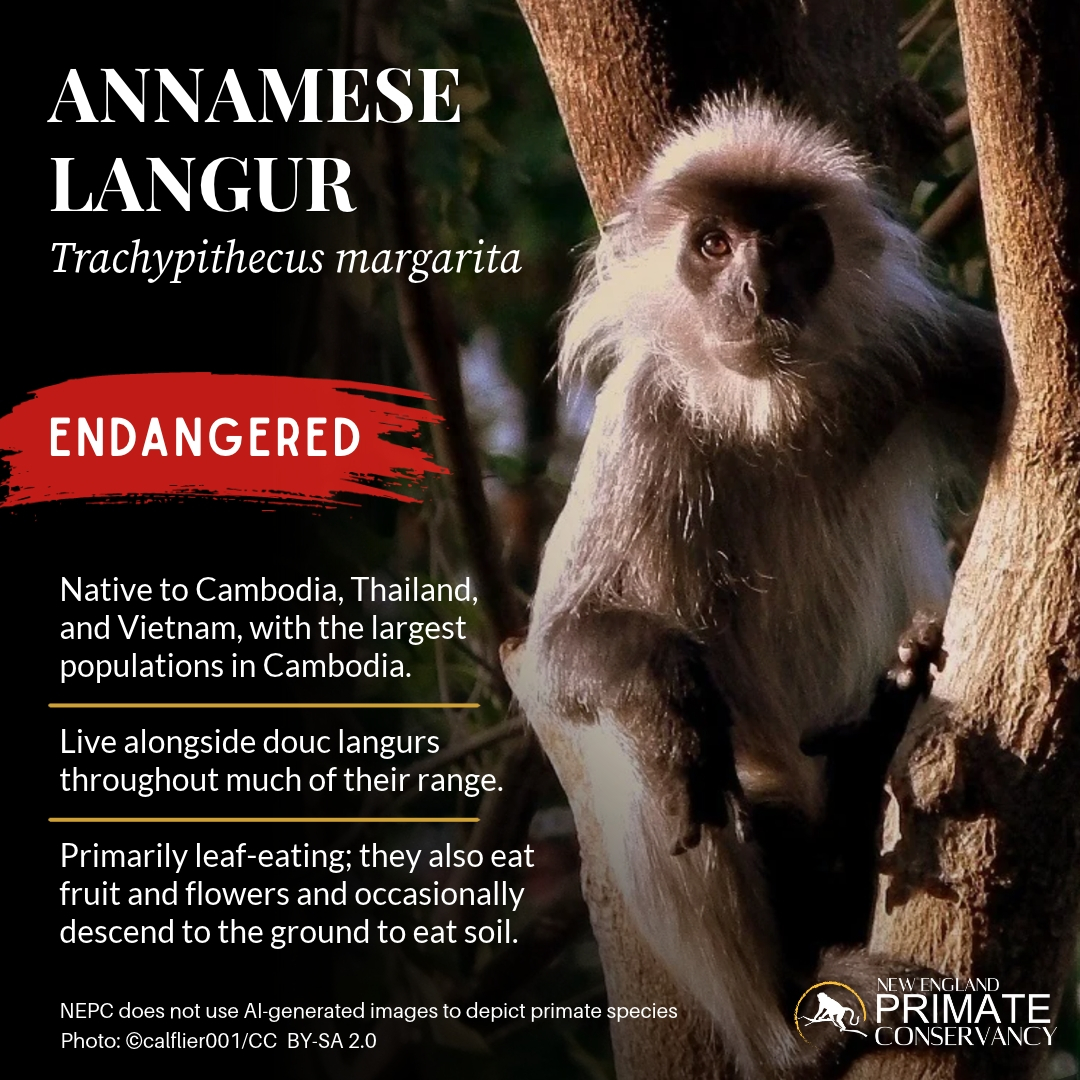
Trachypithecus margarita
CONSERVATION STATUS: ENDANGERED
The Annamese langur, also known as the Elliot’s silvery langur, is found in eastern Cambodia within the provinces of Ratanakiri and Mondulkiri, southern Laos, and south-central Vietnam. They are the most scarce monkey species in Laos, while their largest populations are found in Cambodia. Within their range, they are…
Trachypithecus pileatus
CONSERVATION STATUS: VULNERABLE
The capped langur is a monkey species found in Bangladesh, Bhutan, India, and Myanmar. Within these regions, they may inhabit and thrive in several different ecosystems, such as subtropical, broadleaf, deciduous, and bamboo forests. Geographically, the range of capped langurs is characterized by some significant…
Trachypithecus poliocephalus
CONSERVATION STATUS: CRITICALLY ENDANGERED
The Cat Ba langur, also called the Cat Ba hooded black leaf monkey, golden-headed langur, and the Tonkin hooded black langur, is endemic to Cat Ba Island off the northeastern coast of Vietnam. A species is “endemic” when it is native to a particular area and does not live naturally anywhere else in the world. Cat Ba…
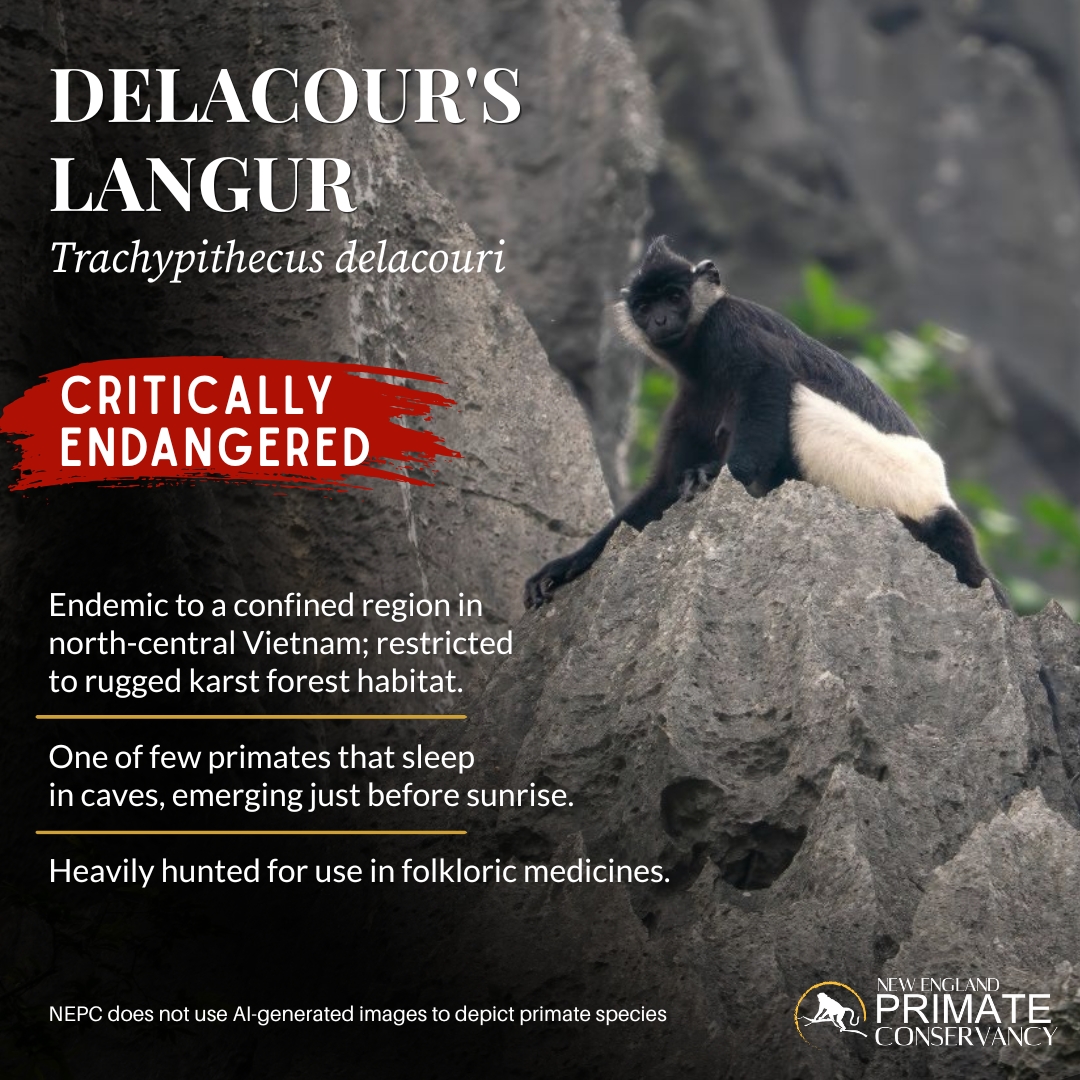
Trachypithecus delacouri
CONSERVATION STATUS: CRITICALLY ENDANGERED
The Delacour’s langur is a critically endangered monkey species native to Vietnam and found in the north central parts of the country. With a geographic range spanning about 1,931 square miles (5,000 km^2) of area, the Delacour langur, locally known as “vooc mong trang”, lives among various limestone karst…
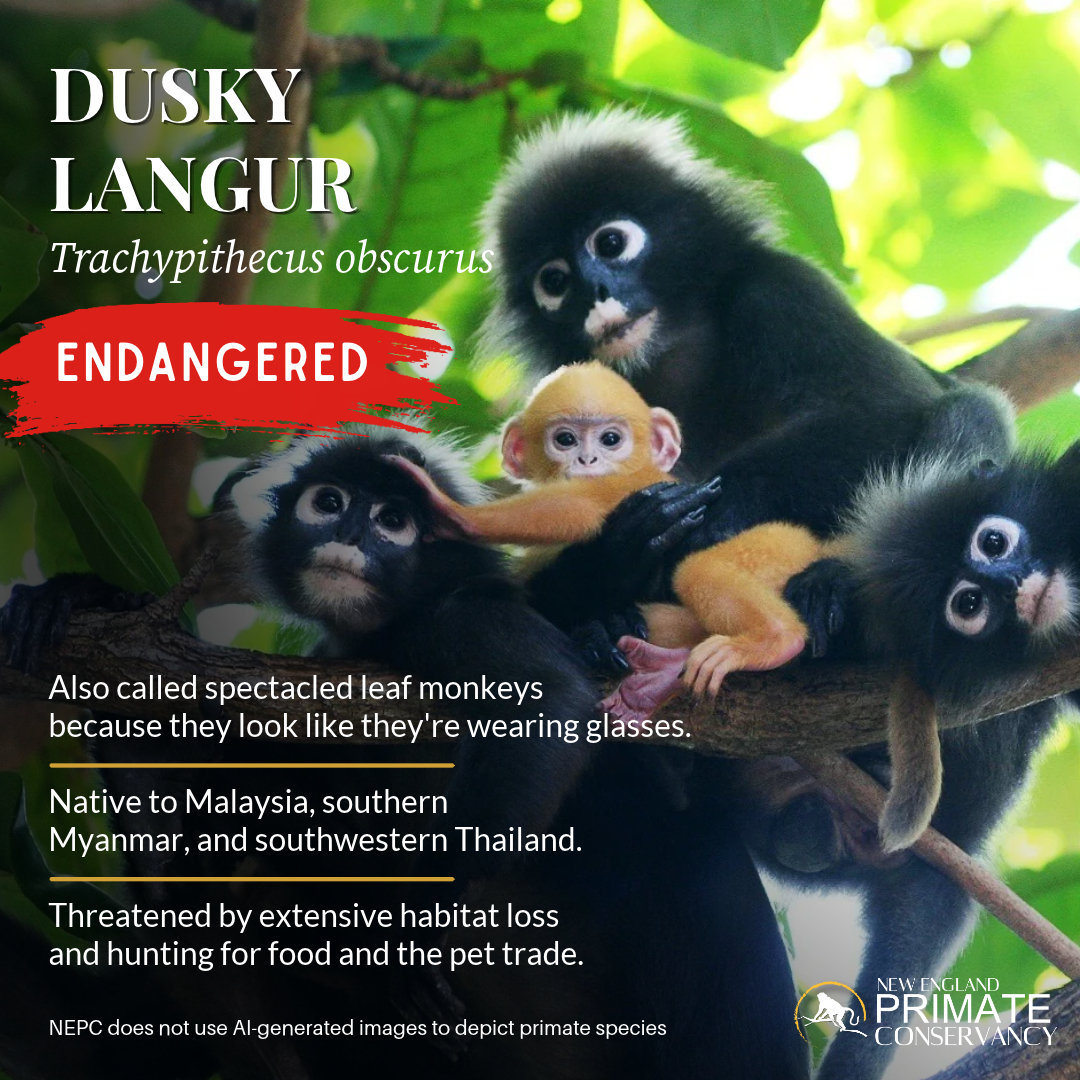
Trachypithecus obscurus
CONSERVATION STATUS: ENDANGERED
Tucked away in the forest canopies of Southeast Asia lives the dusky langur, also known as the dusky leaf monkey, spectacled langur, and spectacled leaf monkey or lutung. This highly adaptive species is spread throughout various areas across the Malay Peninsula. Located in the Andaman Sea of the Indian Ocean, their territory…
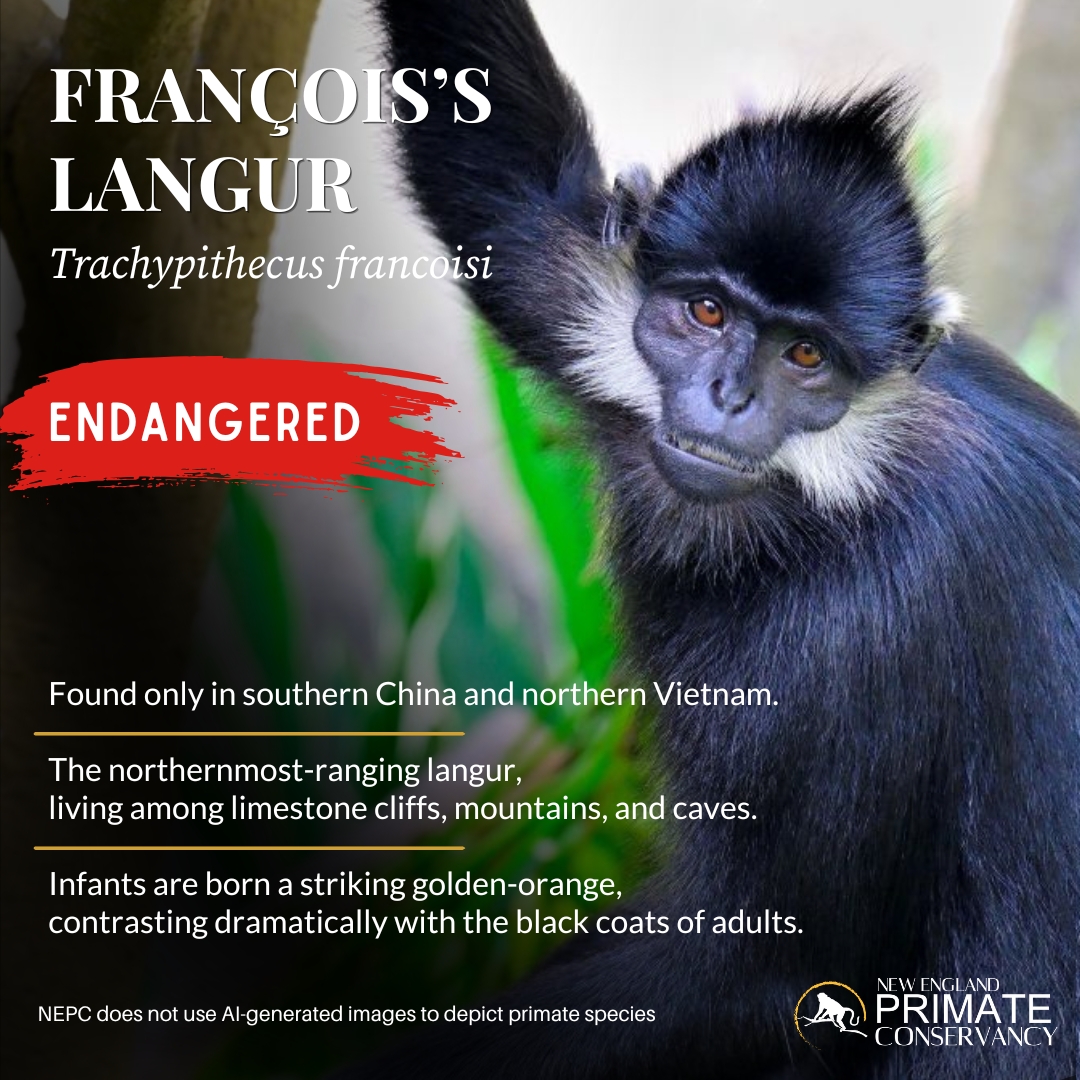
Trachypithecus francoisi
CONSERVATION STATUS: ENDANGERED
Francois’s langurs, also known as the Tonkin langur and the Tonkin leaf monkey, live in the forests that grow along the steep ledges of limestone mountains, known as karst, which are a signature of the landscape of northern Vietnam and southern China. Historically, their distribution spanned across Vietnam’s northeastern…
Trachypithecus geei
CONSERVATION STATUS: ENDANGERED
Golden langurs are endemic to a small region near the Himalayas, confined to the Black Mountain foothills in Bhutan and northeast India (specifically the state of Assam). The Himalayan Mountains restrict their movement north of Bhutan, and the Manas, Sankosh, and Brahmaputra rivers limit their movement south into other…
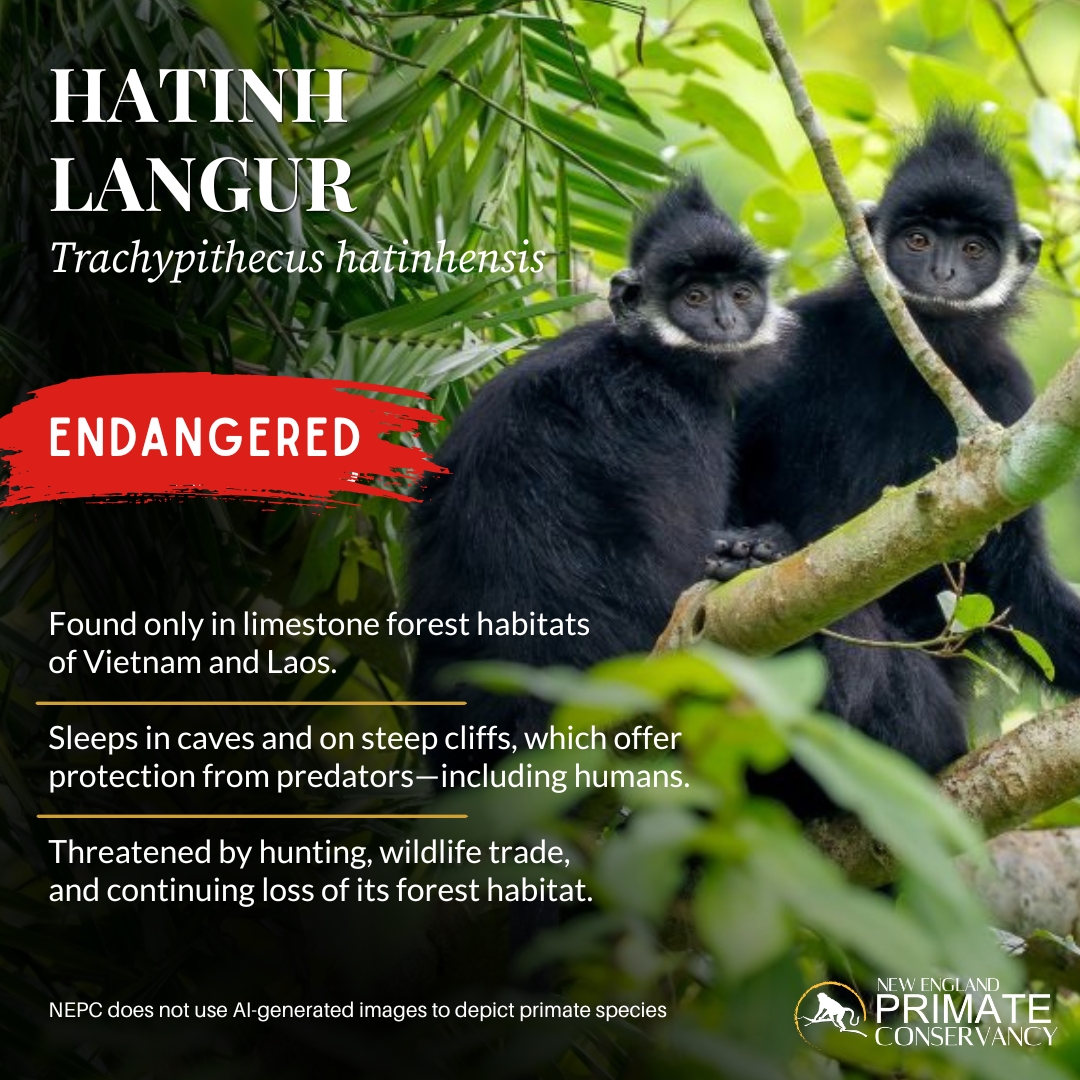
Trachypithecus hatinhensis
CONSERVATION STATUS: ENDANGERED
The Hatinh langur is endemic to Vietnam—a Southeast Asian country about the same size as New Mexico—and to the People’s Democratic Republic of Laos. Although Hatinh langurs are not actually gibbons, locals often refer to them as long-tailed or black gibbons. These elusive creatures inhabit the dense Annamite…
Trachypithecus crepusculus
CONSERVATION STATUS: ENDANGERED
The Indochinese gray langur is a species of lutung found throughout mainland southeast Asia, the region formerly known as Indochina. Home countries include China, where the species occurs east of the Salween River extending to its western limit south of the autonomous prefecture of Xishuangbanna in southwestern…
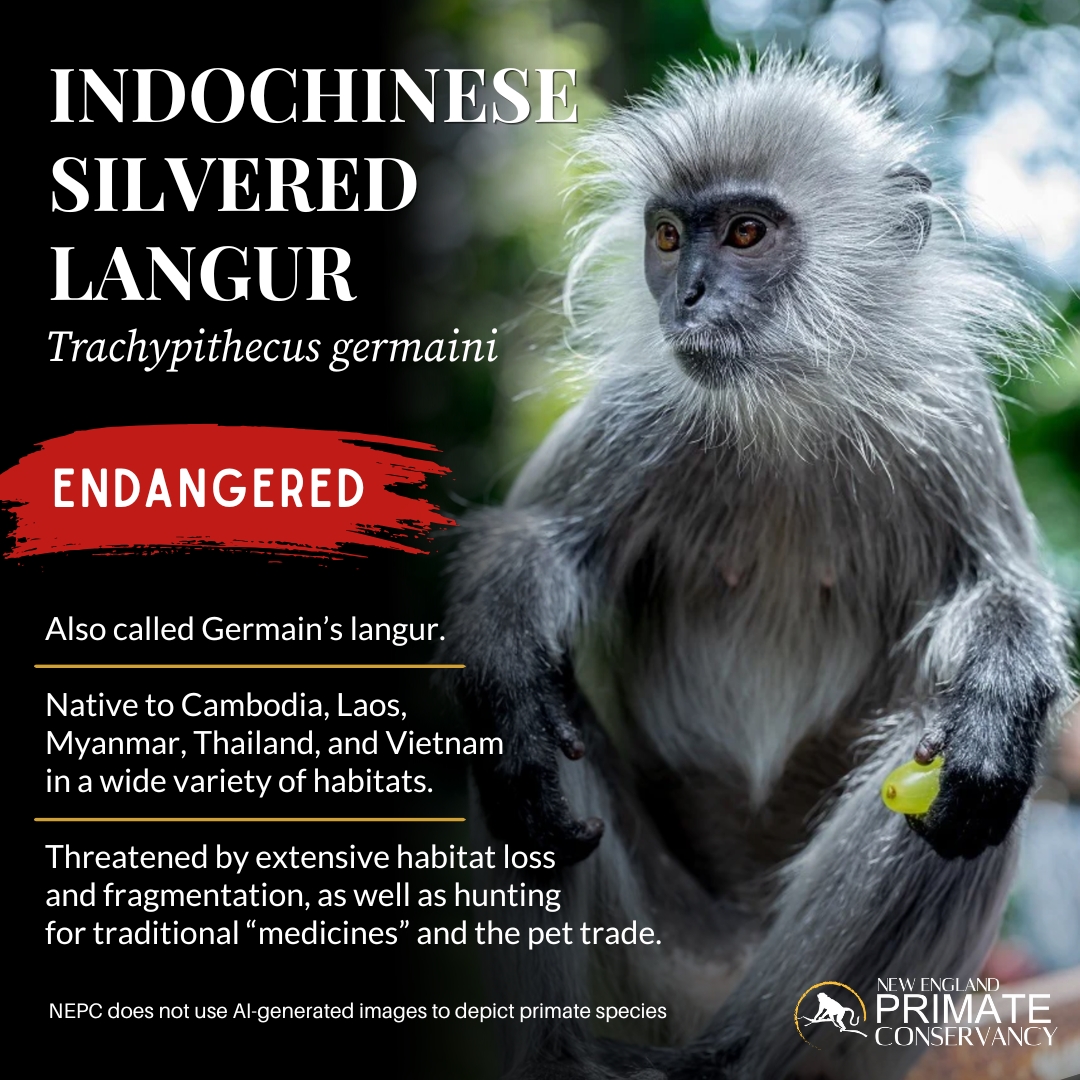
Trachypithecus germaini
CONSERVATION STATUS: ENDANGERED
The Indochinese silvered langur, also known as Germain’s silver langur or the Indochinese leaf monkey, is native to Southeast Asia, particularly Thailand, Myanmar, Cambodia, Laos, and Vietnam. Vietnam’s population has drastically declined, and in the past 50 years, there have been very few sightings. The…
Trachypithecus laotum
CONSERVATION STATUS: ENDANGERED
The Laotian langur, also called the Lao langur or Lao leaf monkey, is endemic to the Lao People’s Democratic Republic (Lao PDR). They are found in the Bolikhamxai and Khammouan provinces, in rugged terrain and dry rainforests. They live in several protected areas, including the Nam Kading National Protected Area, Nam Sanam…
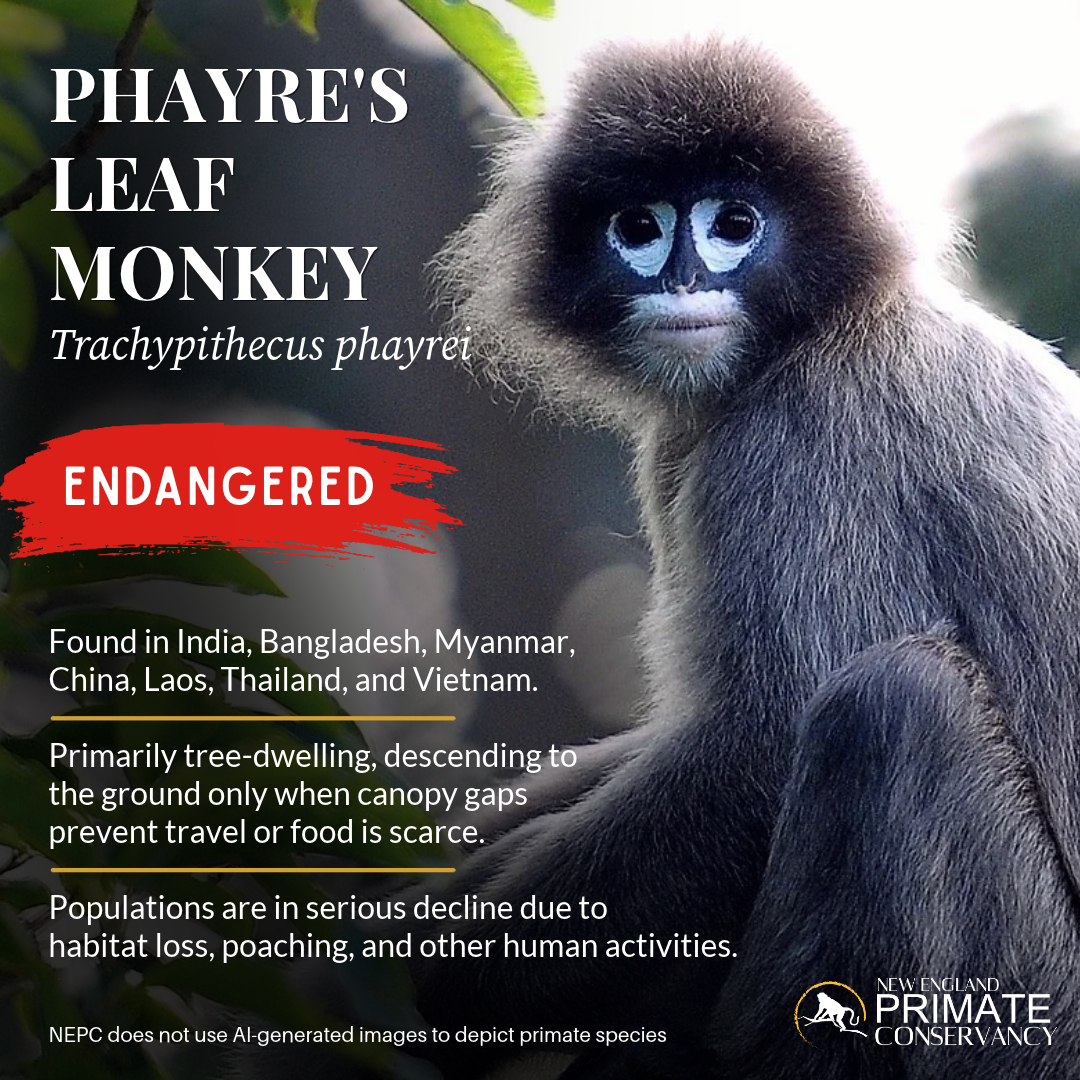
Trachypithecus phayrei
CONSERVATION STATUS: ENDANGERED
Phayre’s leaf monkeys, also called Phayre’s langurs, are native to the south Asian countries of India, Bangladesh, and Myanmar. They make their homes in high-elevation tropical evergreen, semi-evergreen, and mixed moist deciduous forests. Though they prefer primary forest which has not been significantly impacted by…
Trachypithecus popa
CONSERVATION STATUS: CRITICALLY ENDANGERED
A Popa langur lives in the high evergreen forests of Myanmar, particularly the sacred pilgrimage site of Mount Popa (an extinct volcano), which gives the langur its common and scientific names. The main populations are found in Popa Mountain Park and Panlaung-Pyadalin Cave Wildlife Sanctuary. While they are mostly found…
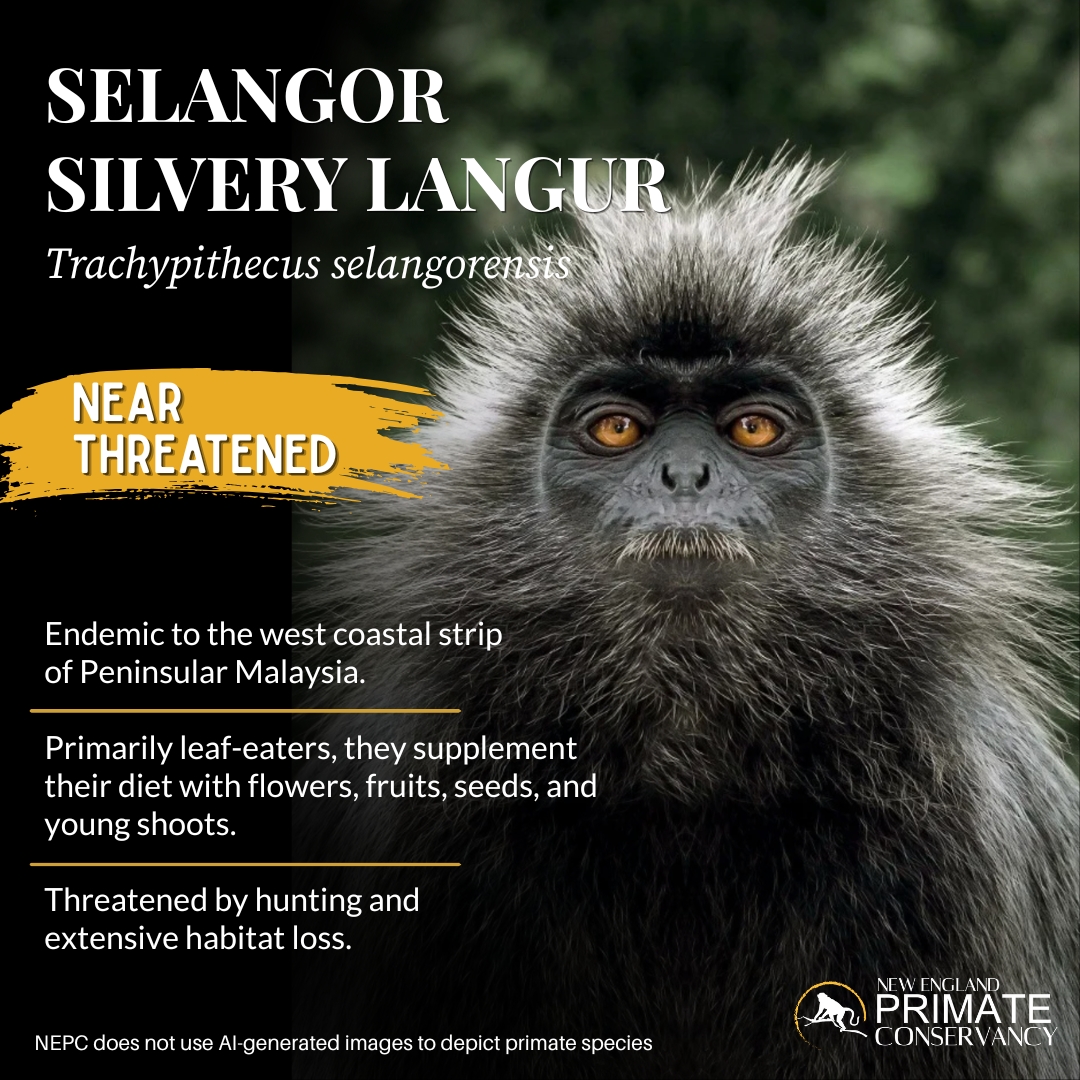
CONSERVATION STATUS: NEAR THREATENED
The Selangor silvery langur is found along a strip on the western coast of Peninsular Malaysia. This strip includes portions of the states of Johor, Negeri Sembilan, Selangor, Melaka, Perak, and Kedah, and even the capital city of Kuala Lumpur! Within this range, they are found in riparian forests (forests next to a body of…
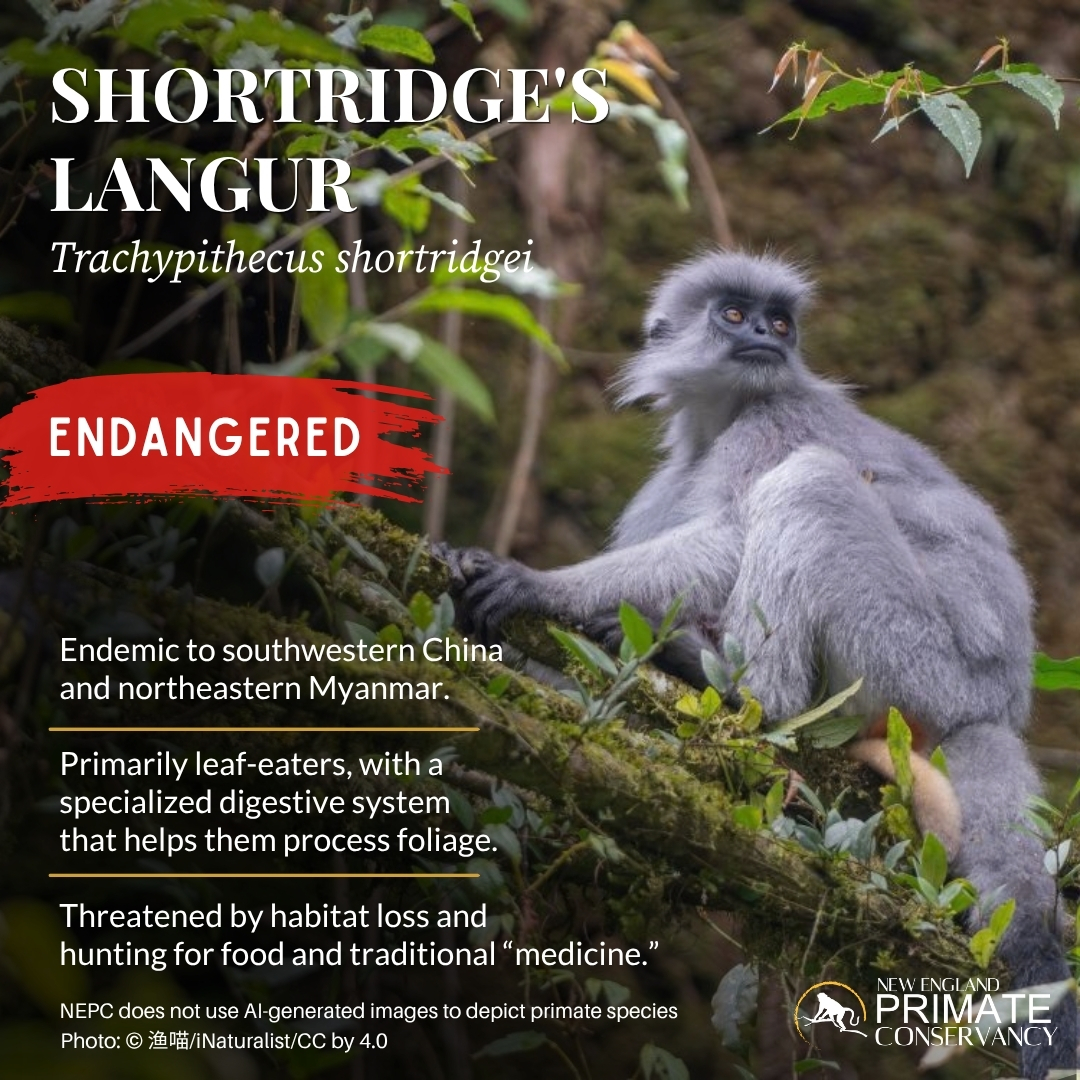
Trachypithecus shortridgei
CONSERVATION STATUS: ENDANGERED
Shortridge’s langurs, also known as Shortridge’s capped langurs, are monkeys native to a small region in southwestern China and northeastern Myanmar. The northernmost tip of their range is in the Dulongjiang (Dulong) River Valley in northwestern Yunnan, in China. In Myanmar, the southern boundary of their range…
Trachypithecus cristatus
CONSERVATION STATUS: VULNERABLE
The silvery lutung, also known as the silvered leaf monkey or the silvered langur, is found in numerous areas of Indonesia, including Borneo, Sumatra, Java, and the Natuna Islands, as well as in parts of the southwestern Malay Peninsula and other nearby islands. Within this range, silvery lutungs prefer dense forests; however…
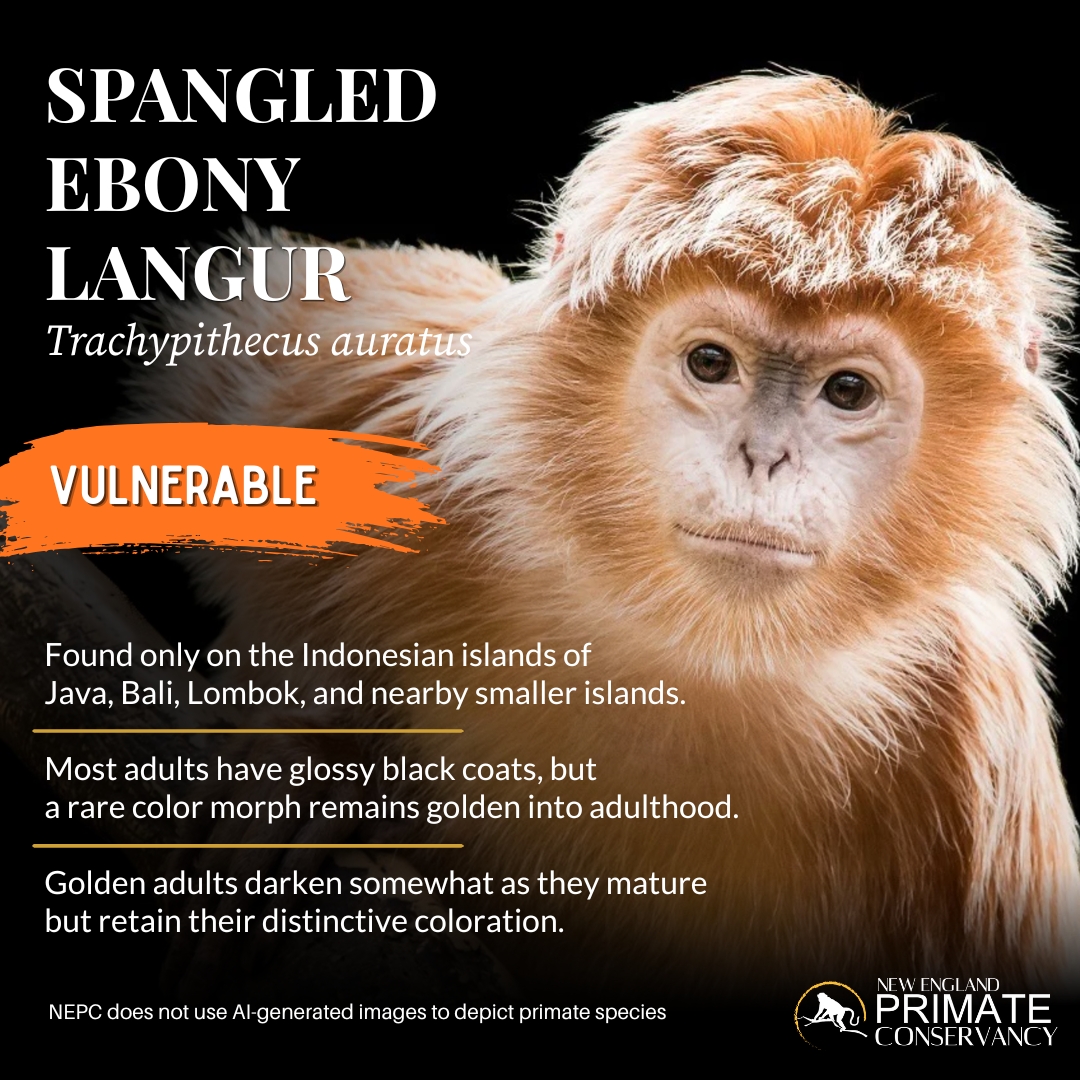
Trachypithecus auratus
CONSERVATION STATUS: VULNERABLE
Spangled ebony langurs are Old World primates in the Colobine, or leaf-eating, family. They are endemic to isolated forest fragments of East Java, as well as the small islands of Bali, Lombok, Palau Sempu, and Nusa Barong. These volcanic islands are home to deciduous forests drenched by heavy downpours during the…
Trachypithecus mauritius
CONSERVATION STATUS: VULNERABLE
The West Javan ebony langur is endemic to the westernmost forests of Java, the largest island in Indonesia. Its distribution is limited to the region west of the Cisalak River, south of Jakarta, along the southern coast near Pelabuhan Ratu, and east to Cikaso. West Javan ebony langurs live in dry deciduous forests, swampy…
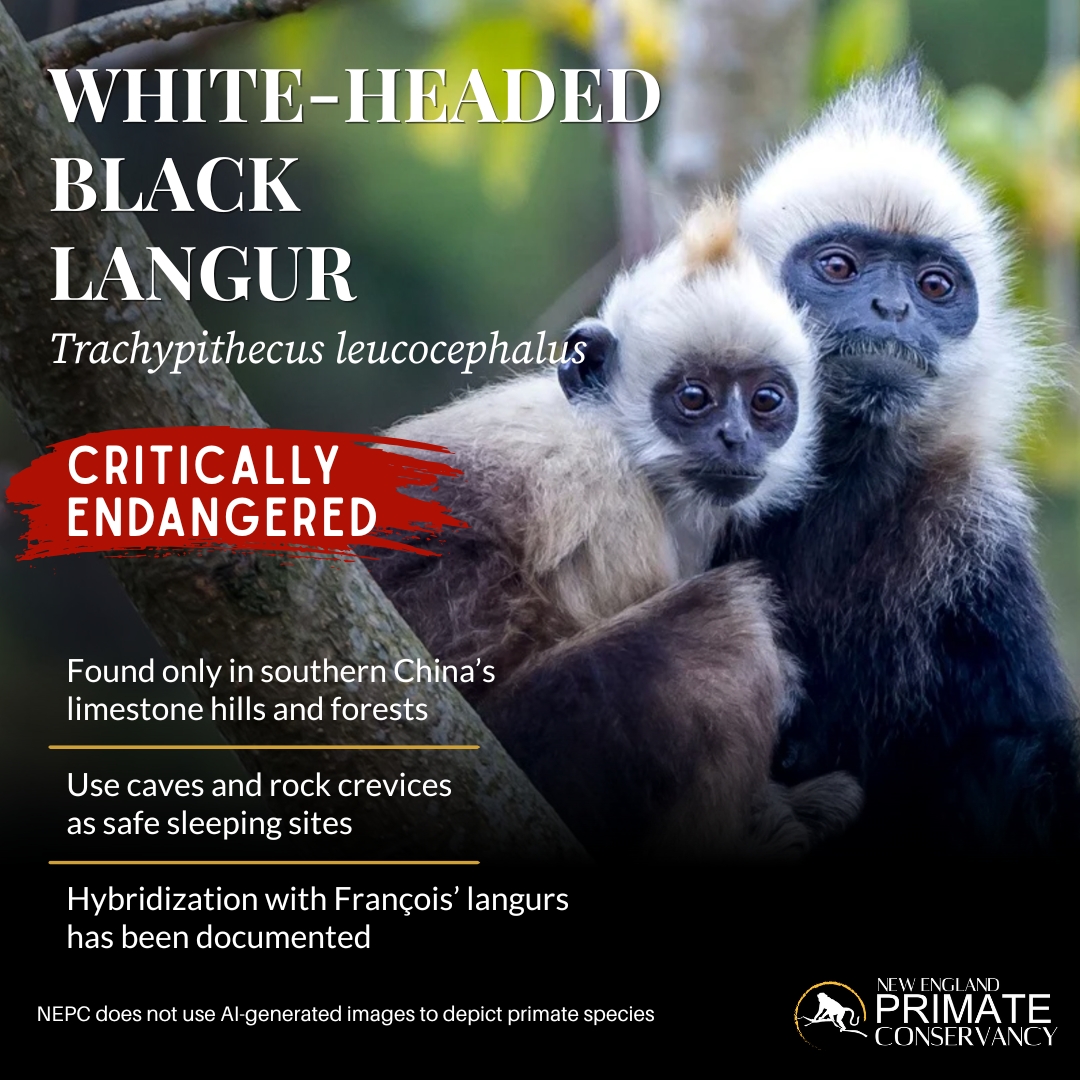
Trachypithecus leucocephalus
CONSERVATION STATUS: CRITICALLY ENDANGERED
The white-headed black langur, also known as the white-headed langur, lives only in the Guangxi Zhuang Autonomous Region of southern China, near the border with Vietnam. Their restricted range lies between the Zuojiang and Mingjiang rivers and the Shiwan Mountains, primarily within Chongzuo, Fusui, Ningming, and Longzhou…